The picture room
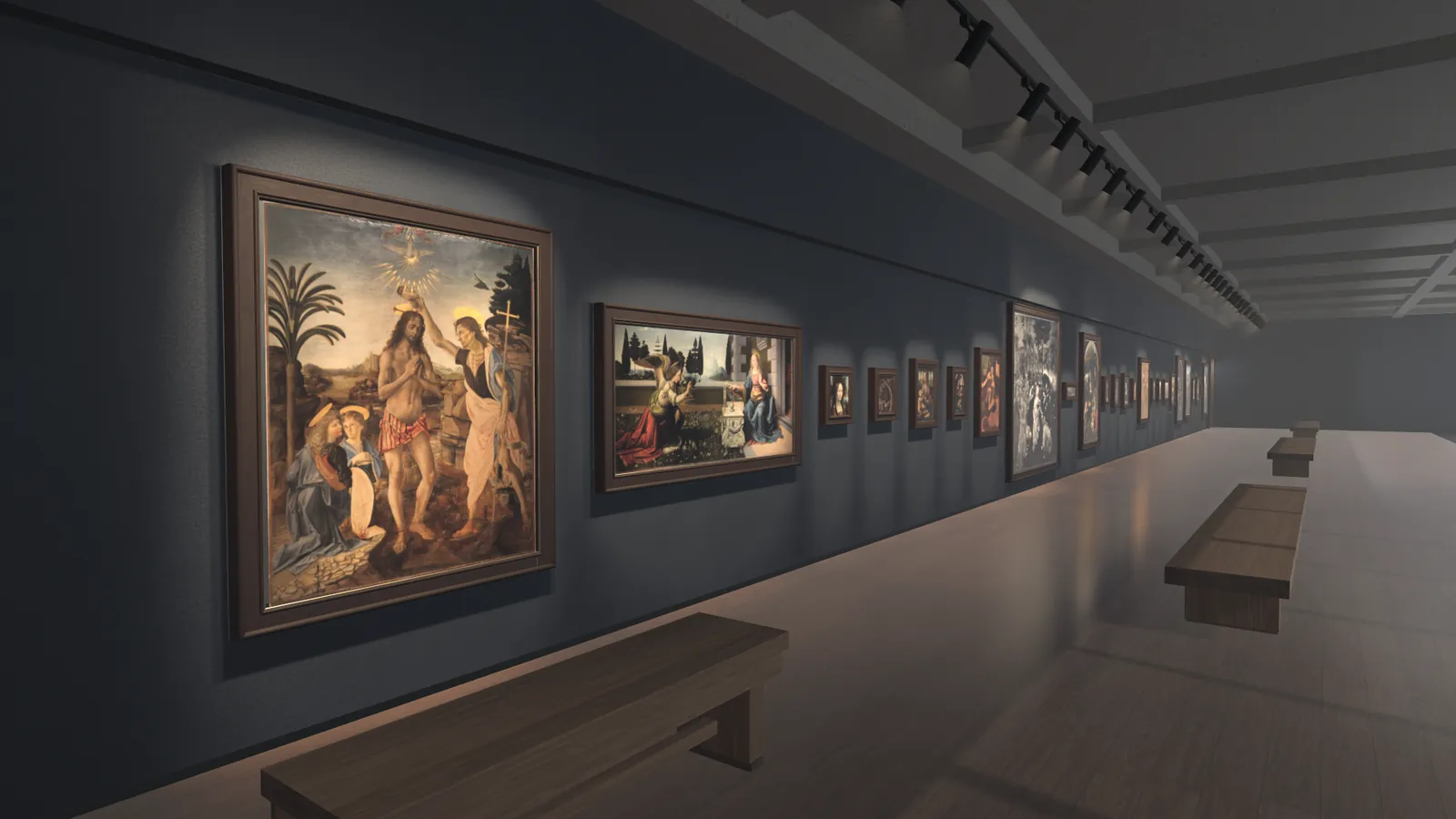
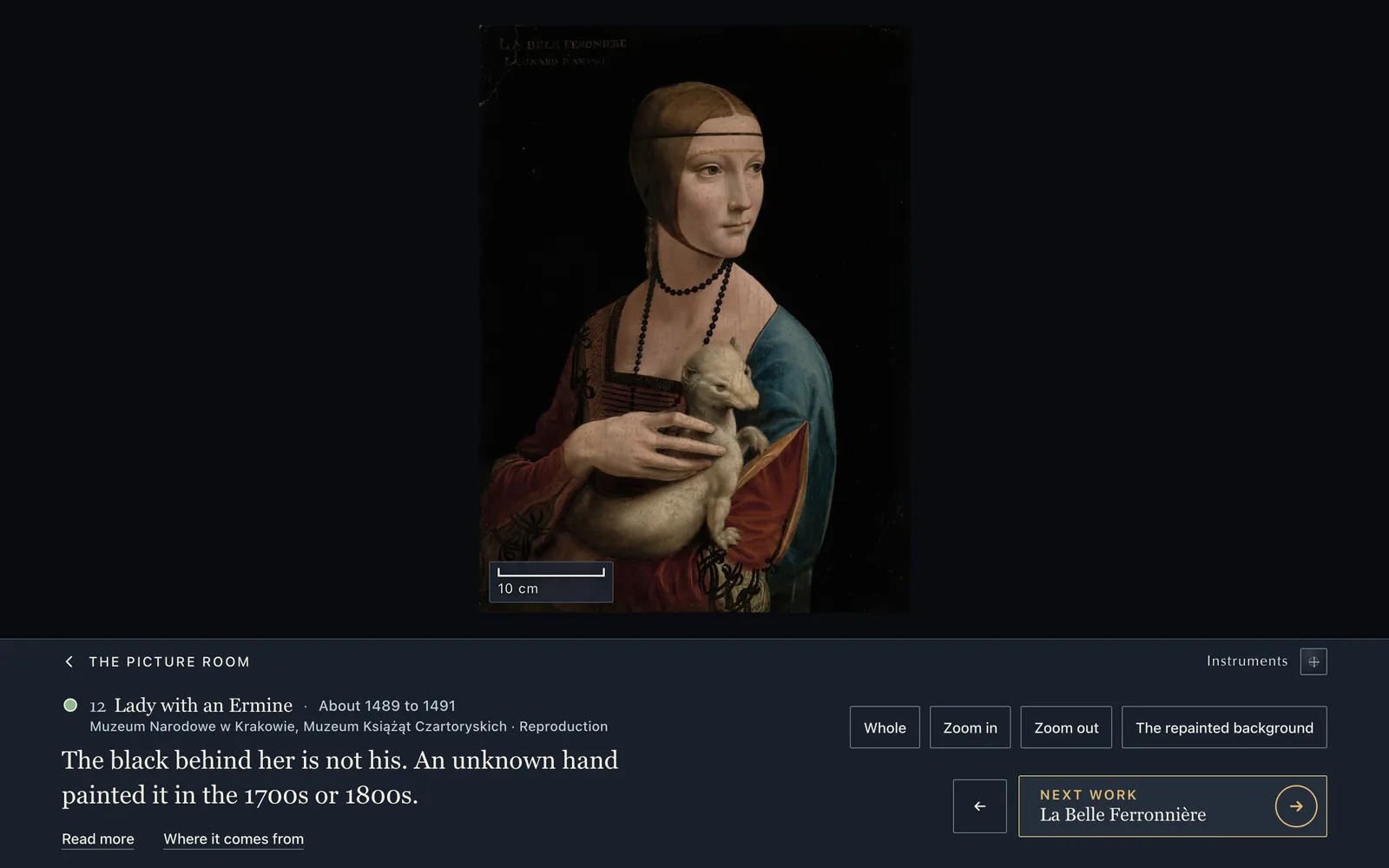
His pictures hang on one wall, more than 34 metres long, roughly in the order he made them, each close to its real size. The Mona Lisa hangs among them.
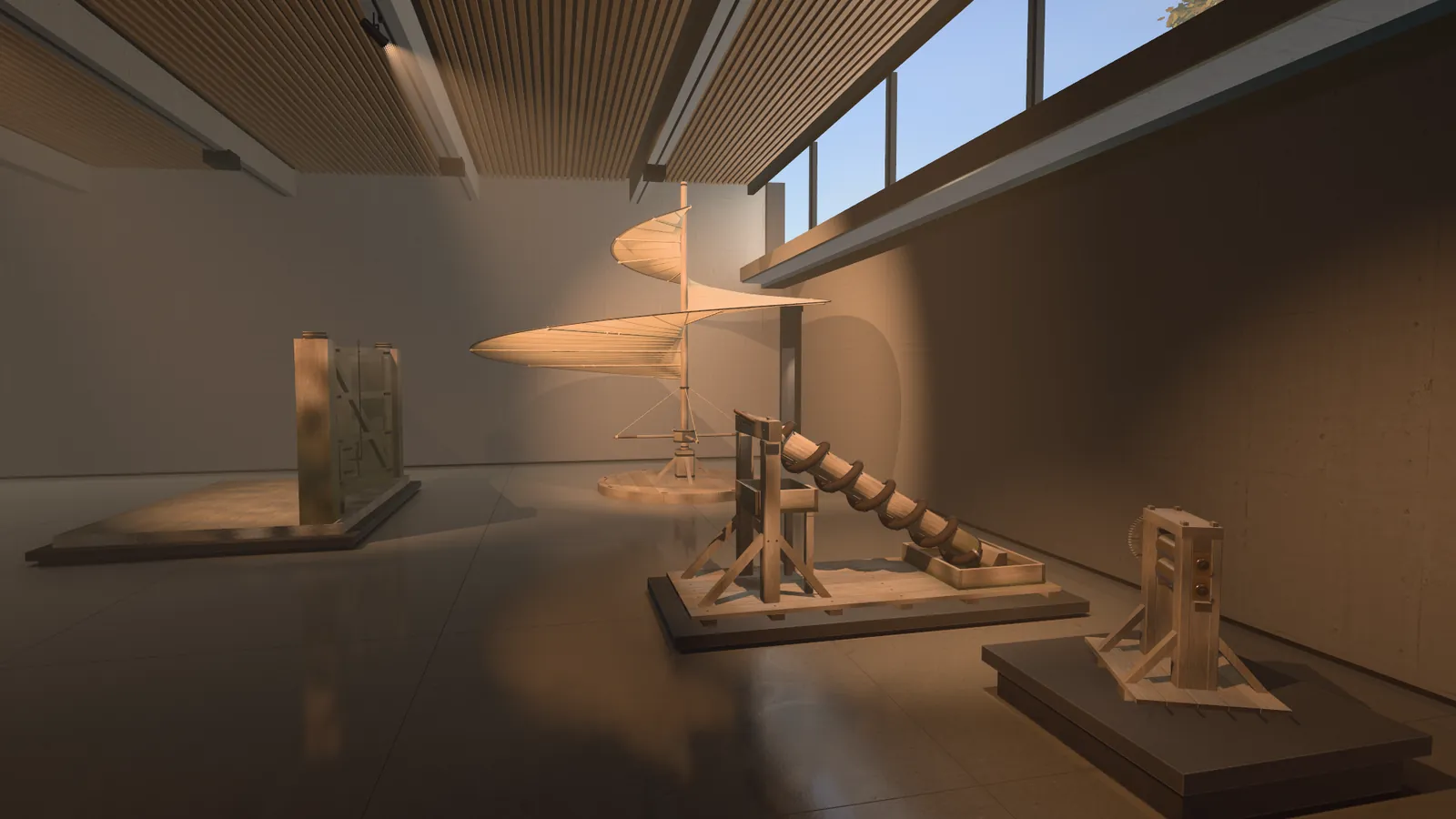
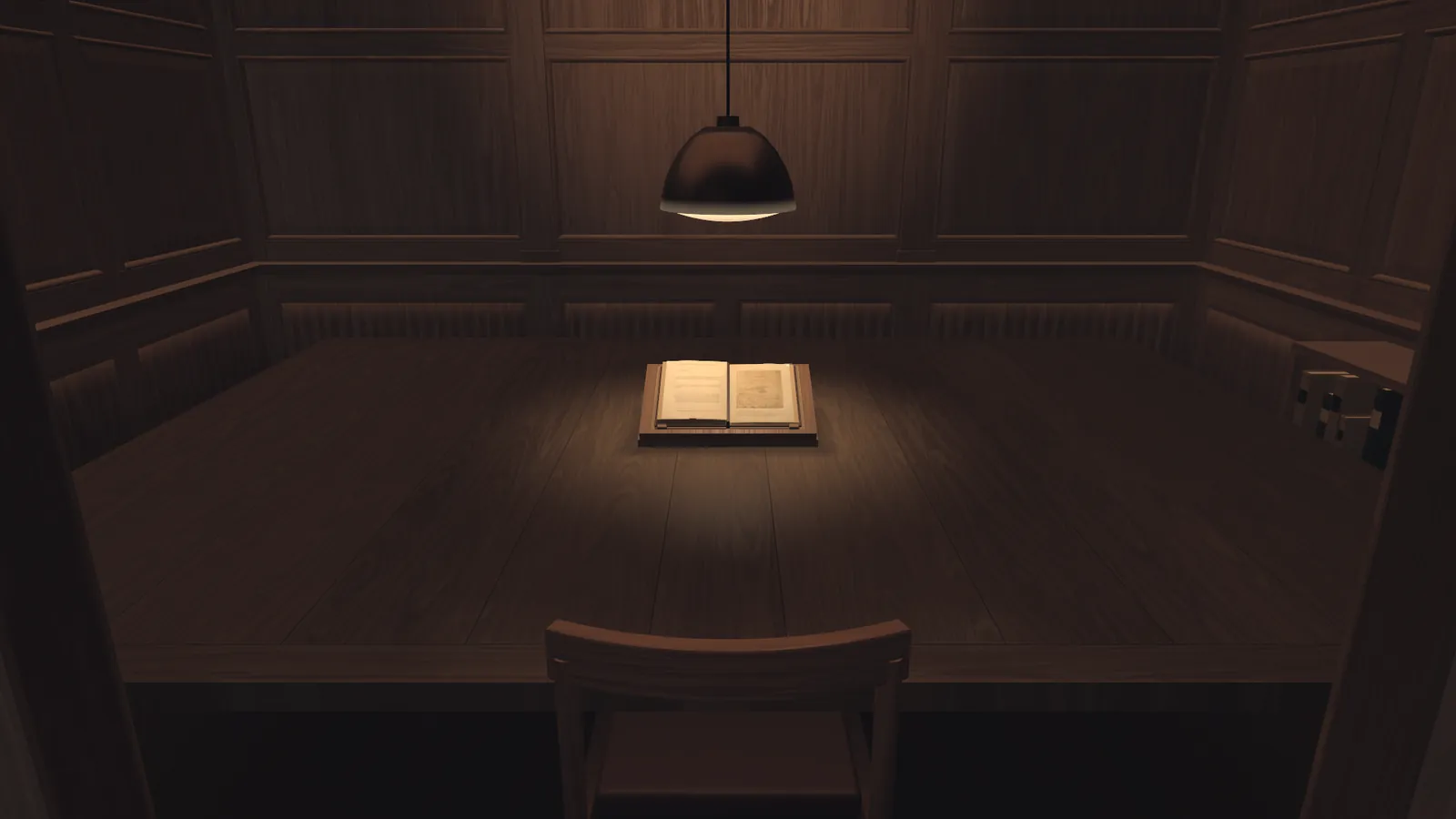
A walk of 17 stops past about 75 works you can step up to: 25 pictures close to their real size, 15 machines, 29 anatomy sheets and his notebooks.
Free entry, no account. What this museum is
The wing shows Clos Lucé in Amboise on 10 October 1517: his last house, on one day of his life. The day is documented: Antonio de Beatis wrote it down in his diary. He was secretary to Cardinal Luigi d'Aragona, who came to visit that day. The hour is our choice. Beside the house stand the museum's own rooms for his pictures, his machines, his notebooks and his anatomy sheets.
You go from stop to stop through a film, made with the museum's own software. At most stops you can step up to the works. The pictures of rooms on this page are stills from that film.
His pictures hang on one wall, more than 34 metres long, roughly in the order he made them, each close to its real size. The Mona Lisa hangs among them.
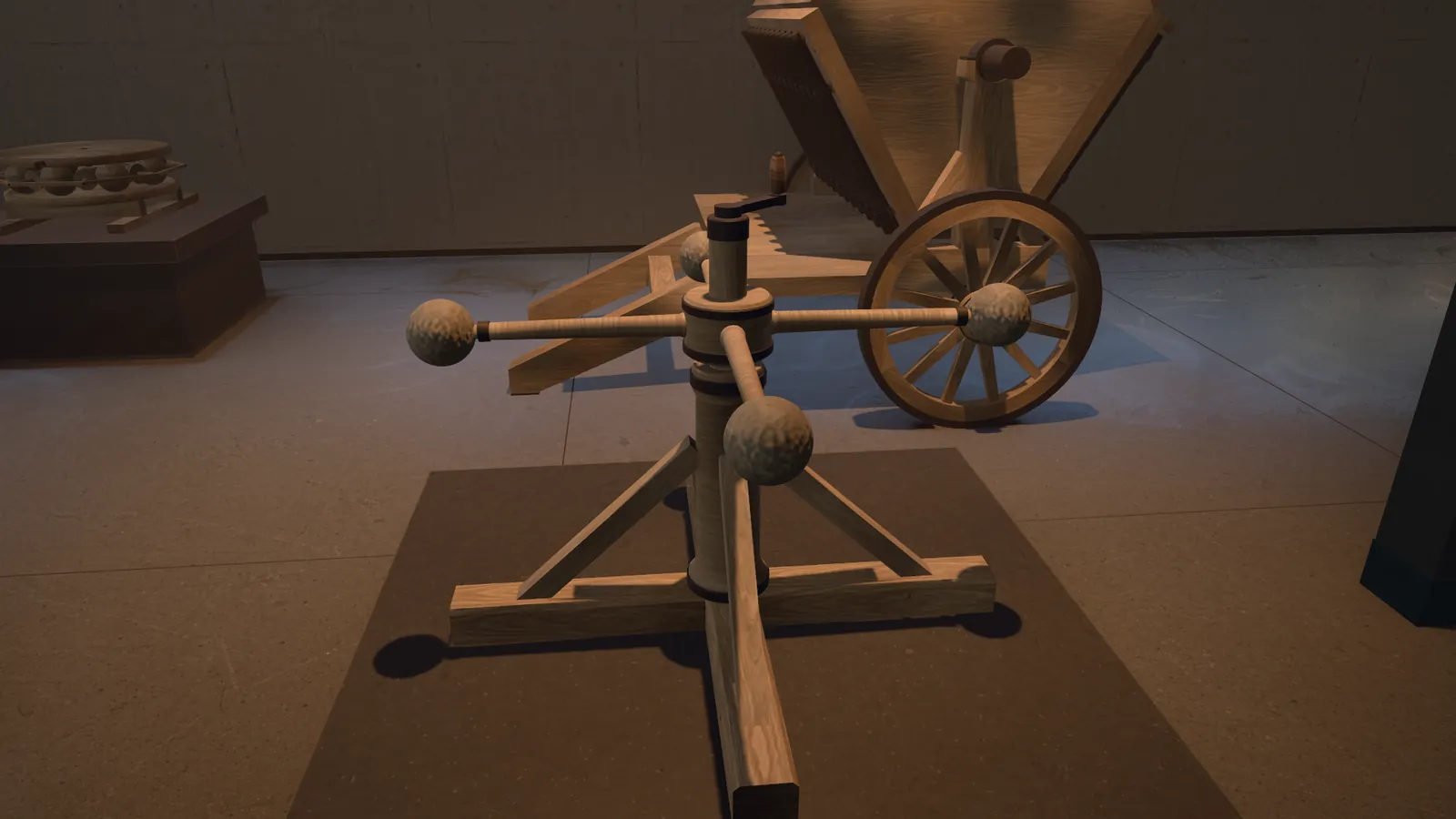
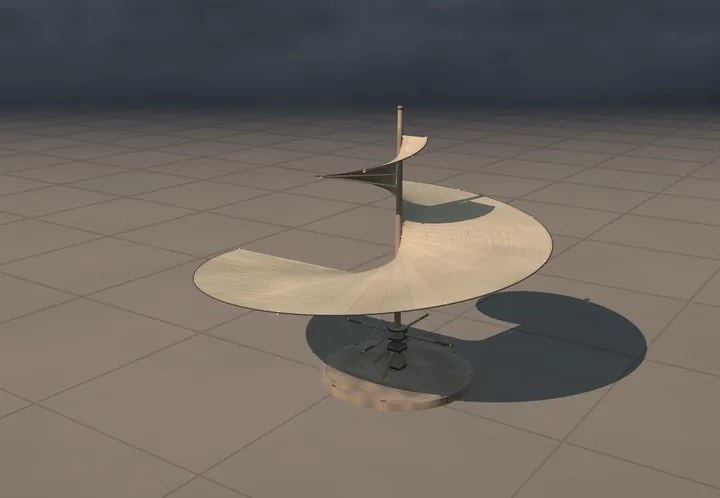
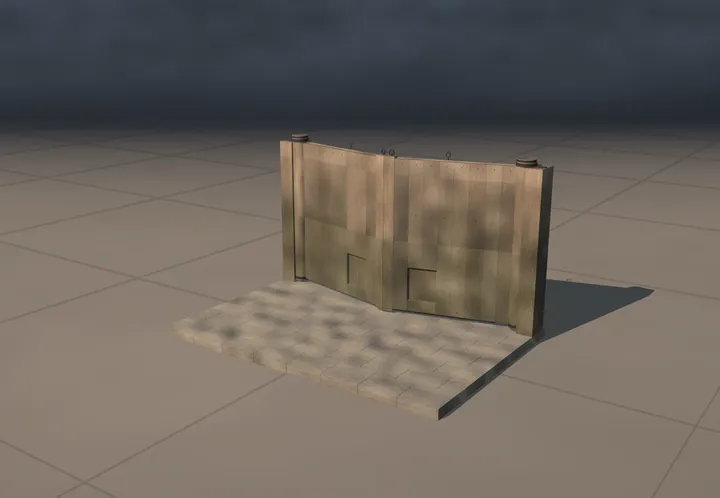
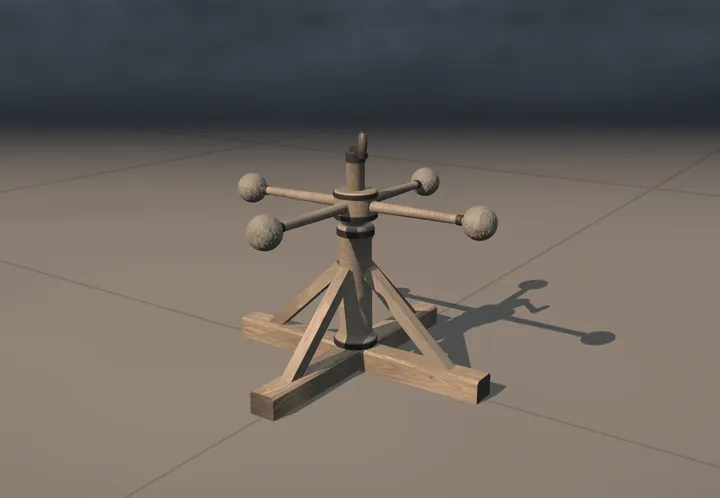
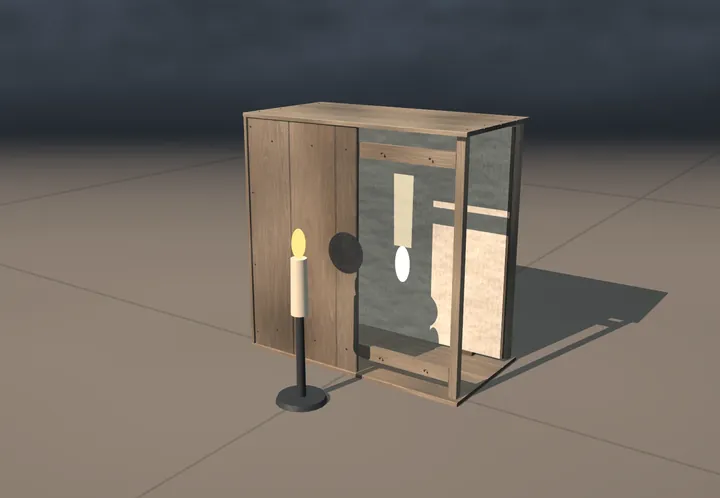
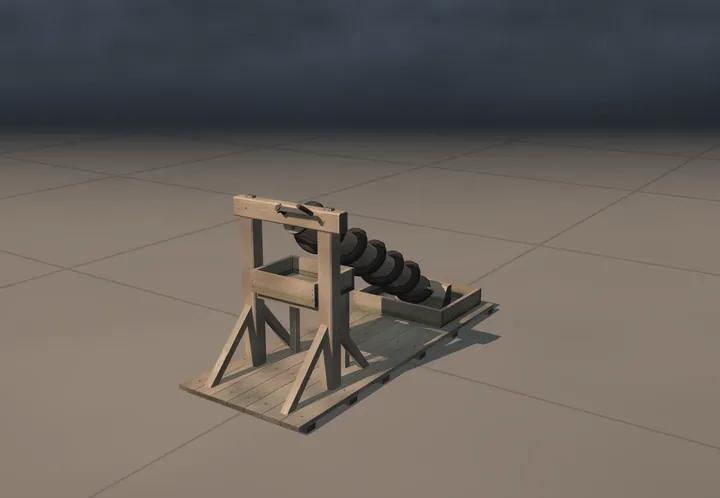
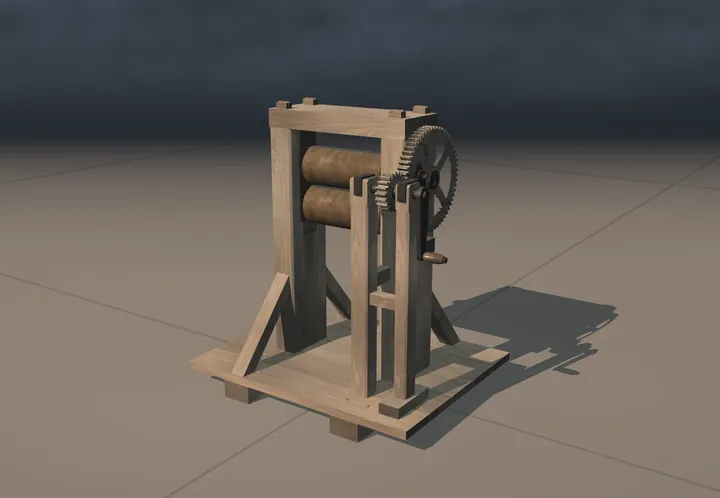
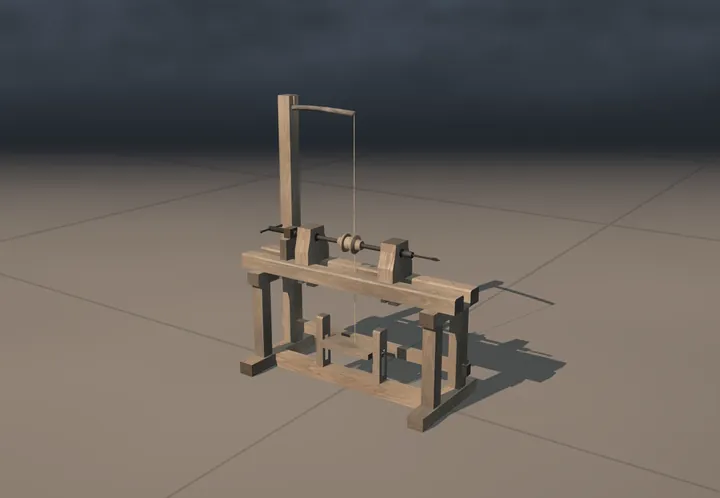
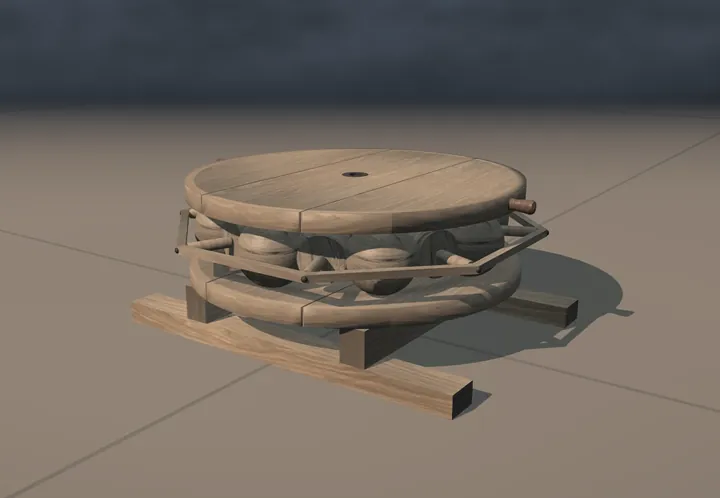
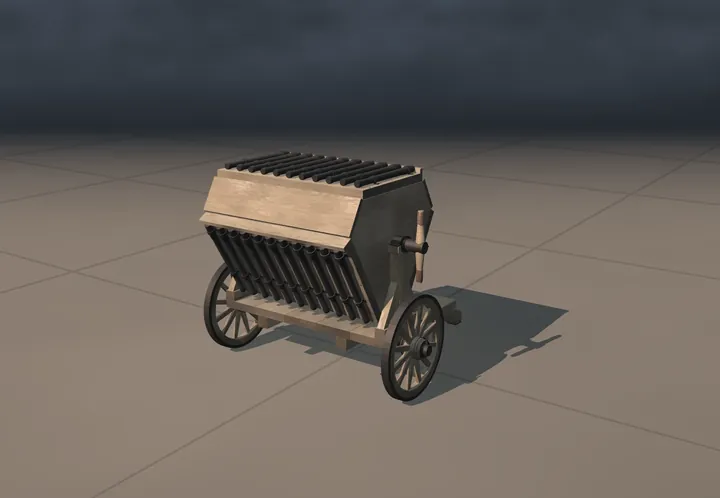
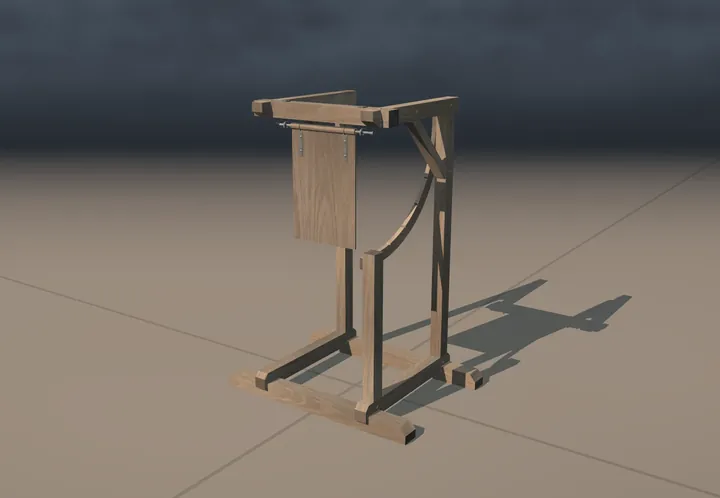
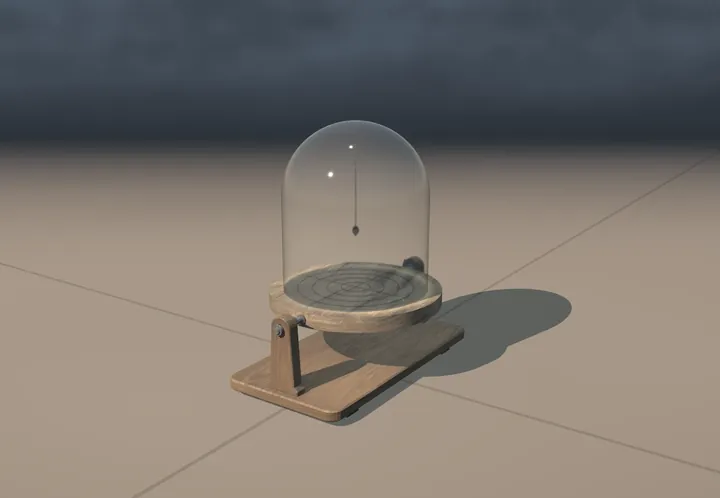
Nine machines stand here, built in code after his sheets: the aerial screw, lock gates, a water screw, a rolling mill, a drilling machine, a flywheel, a ball bearing, a gun with three rows of barrels, and the camera obscura in its own dark bay. Each can be set in motion and seen up close, with the sheet it comes from. Two of the kinds, the lock gates and the water screw, were in use before his time.
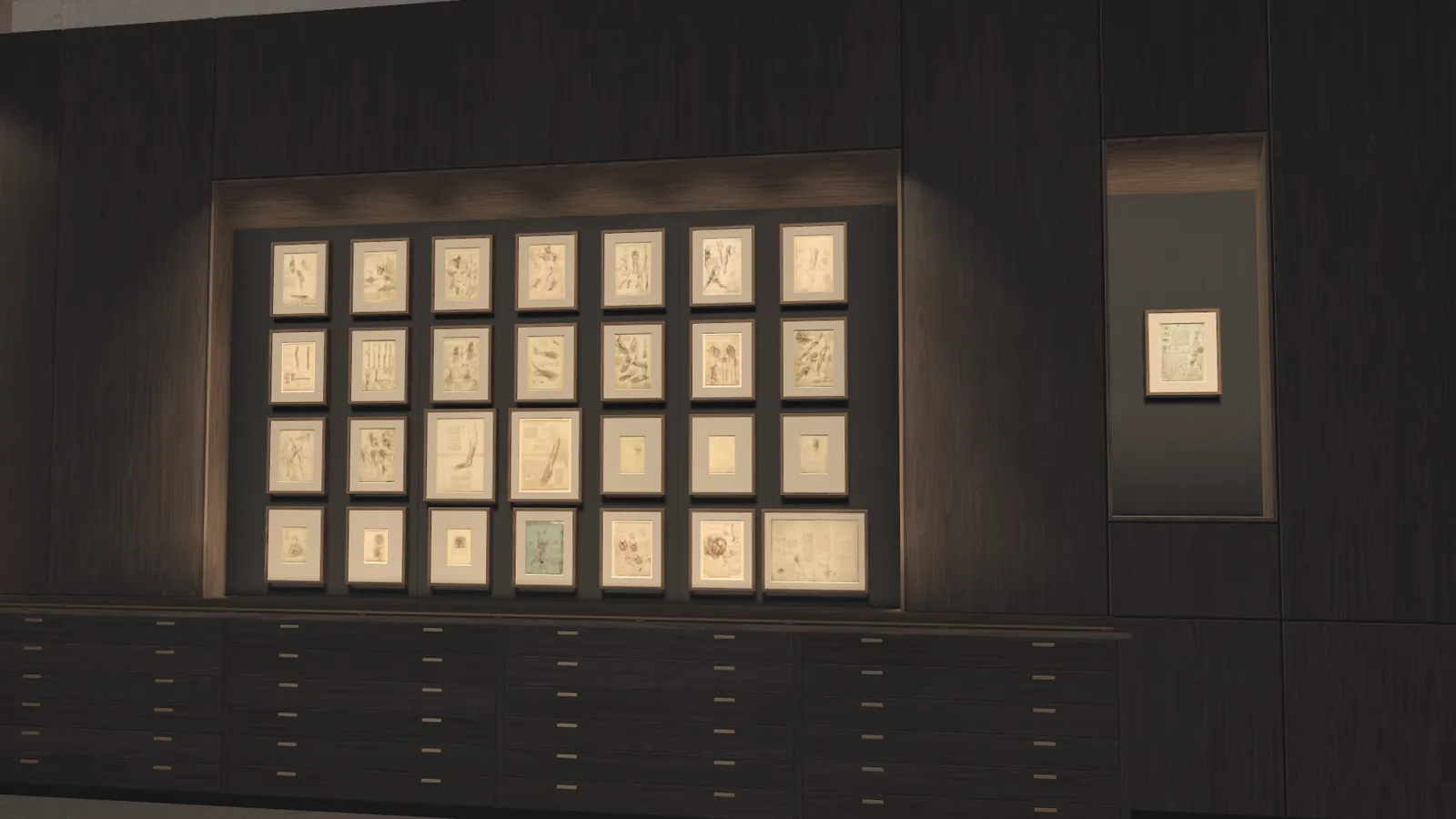
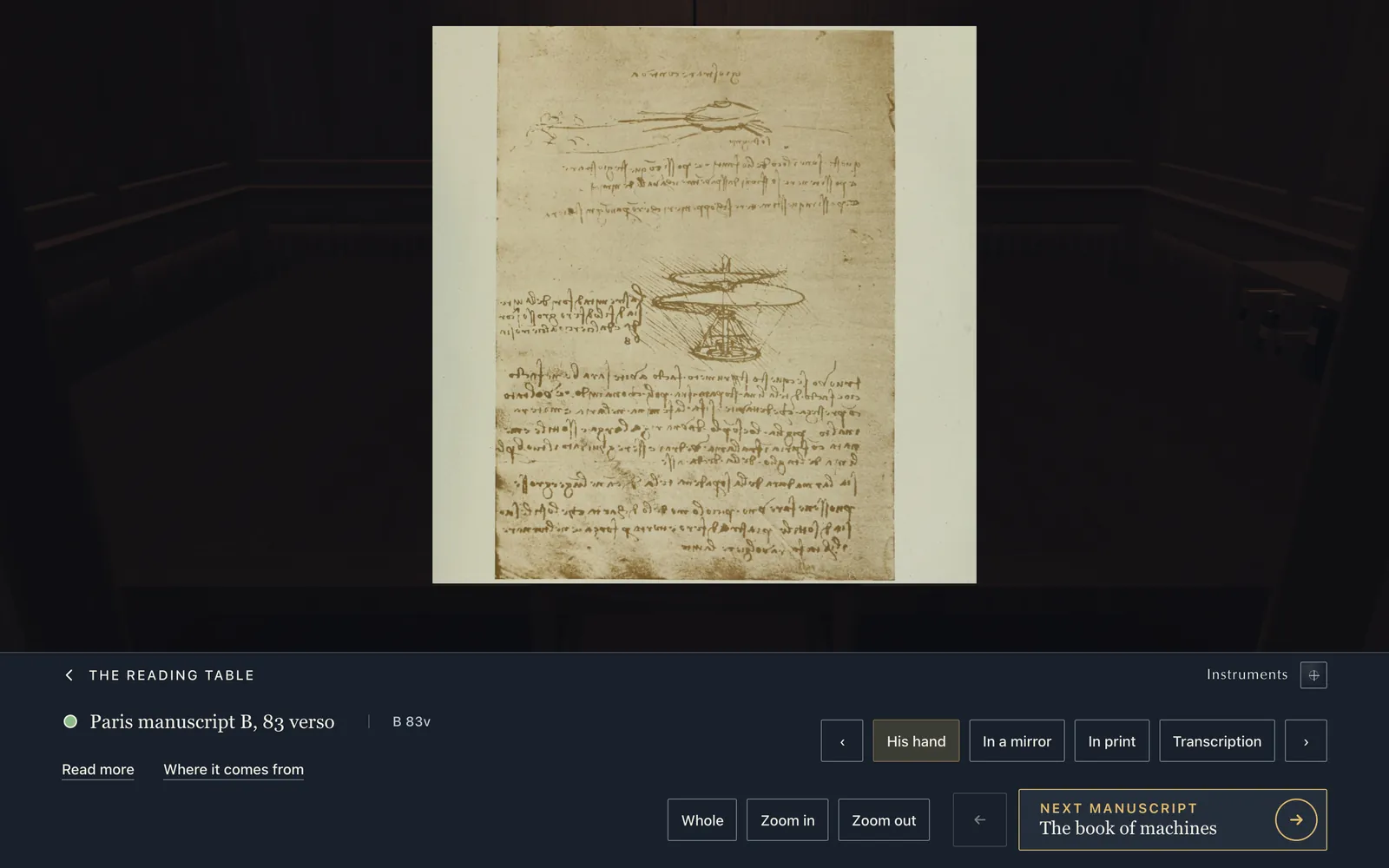
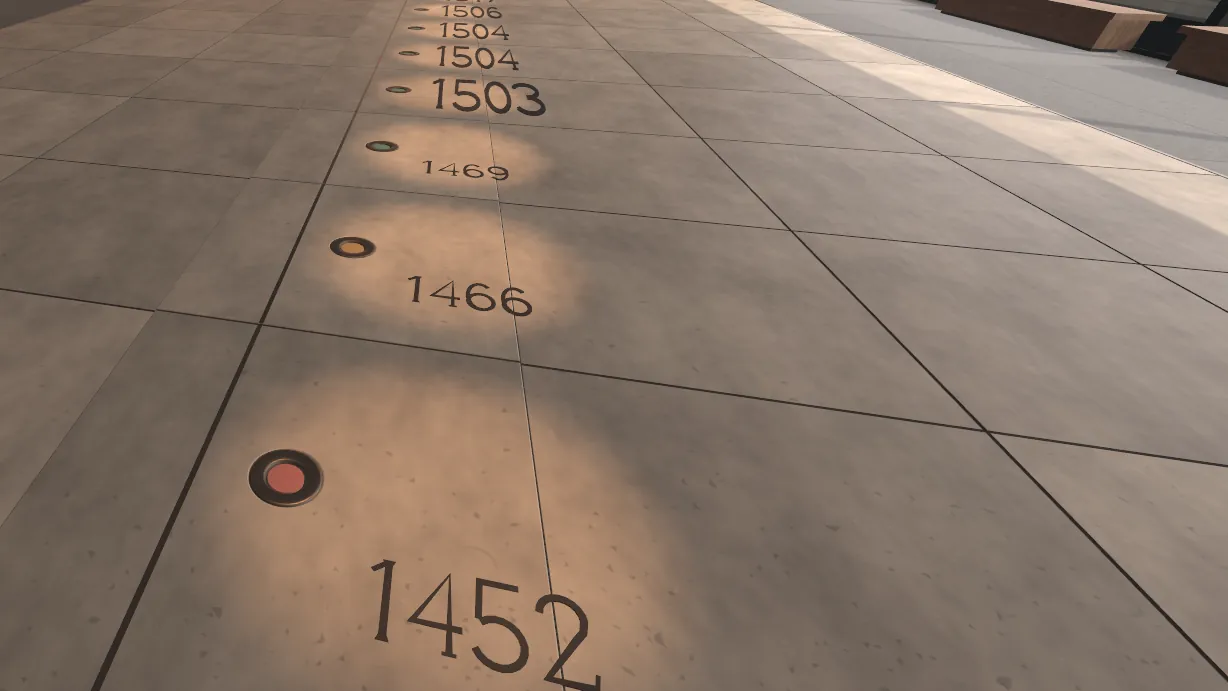
The gallery holds the reading table, a wall of his anatomy sheets and the dates of his life, cut into the floor. Each of the three is a stop of the walk.
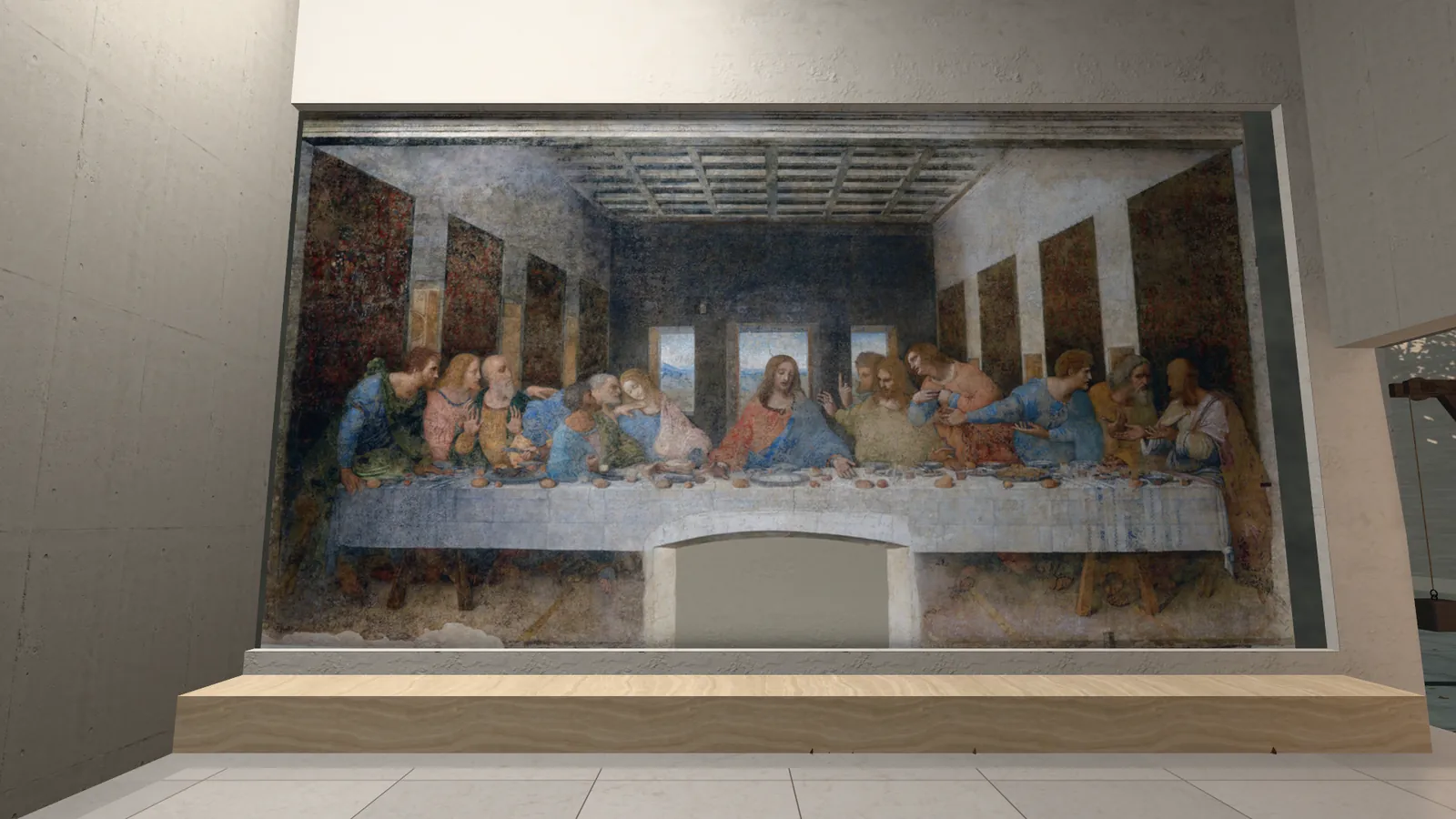
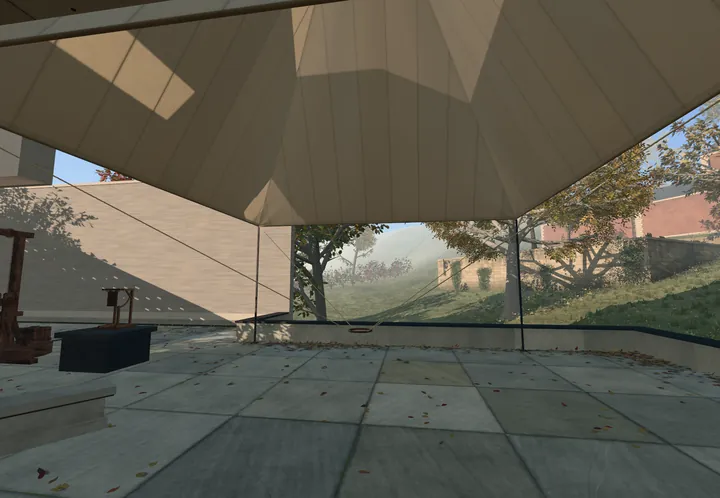
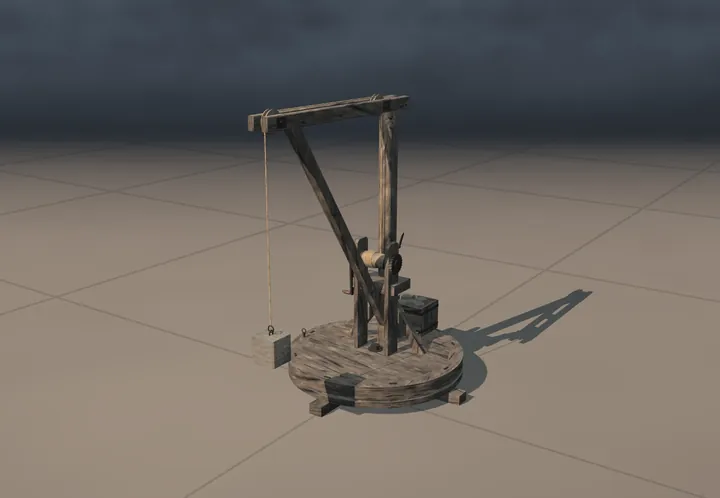
Outside, a wall carries the Last Supper. Beside it stand the parachute, the revolving crane and a wind gauge. The court is the museum's own design, not a place from his life.
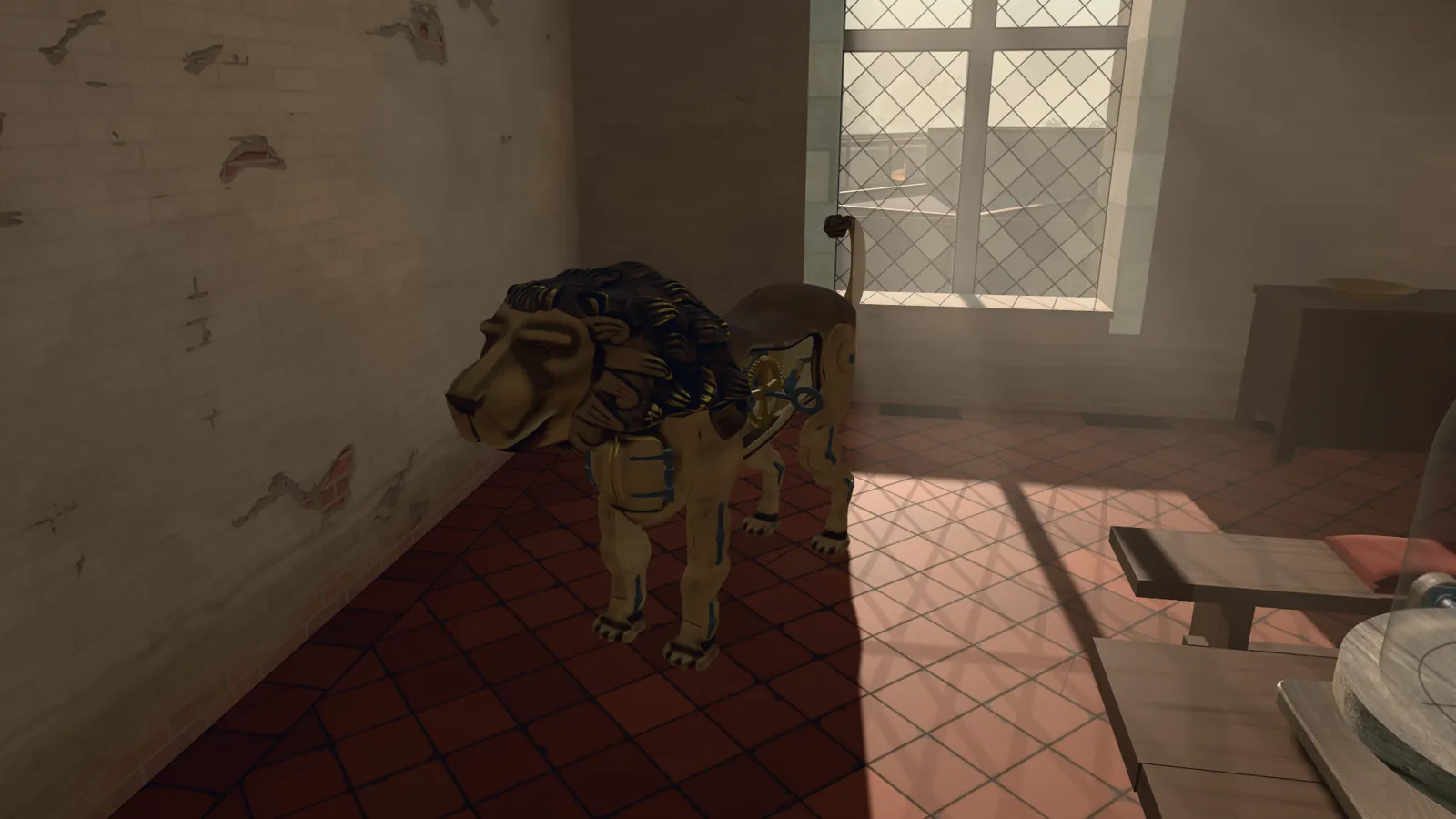
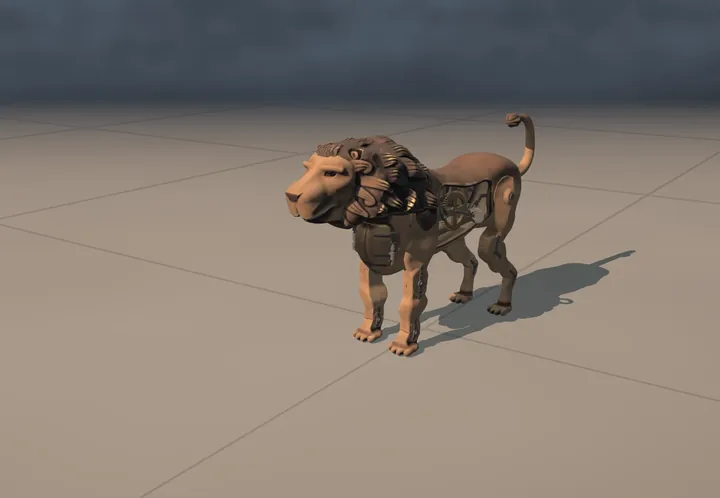
Old accounts tell of a lion Leonardo made for a King of France. It walked a few steps, stopped and opened its chest full of lilies.
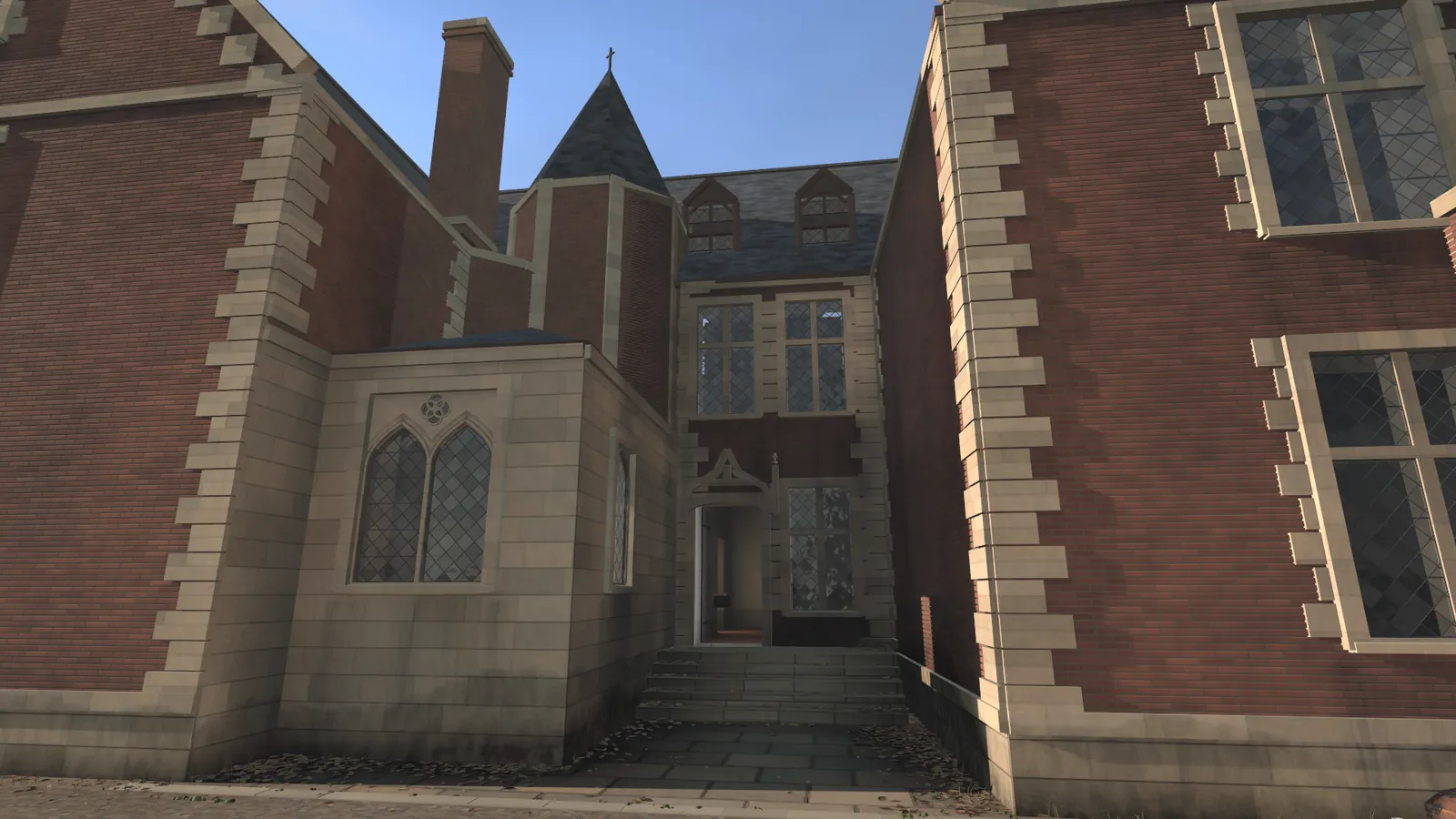
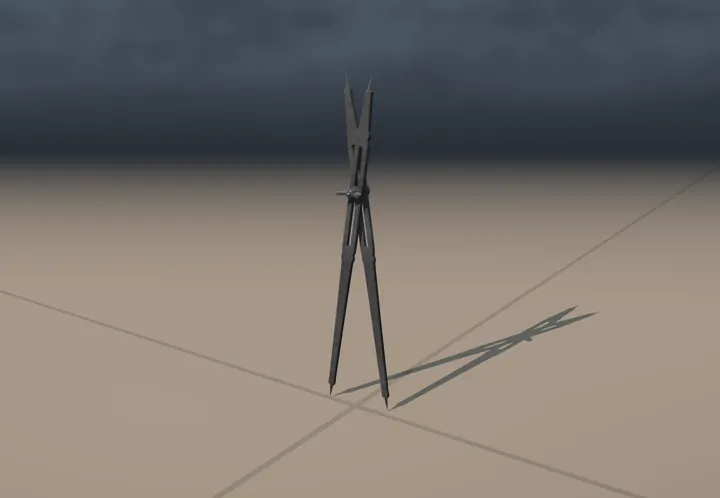
His last house, Clos Lucé in Amboise, is rebuilt in code from plans and photographs. You enter one room only, the great hall: on its table two instruments after his sheets, by the wall the mechanical lion. The chapel, the study window and the north room you see from outside.
Here is what the wing holds, in the order of the walk: every picture, machine, page and sheet you can step up to.
24 works hang here: 22 paintings and two drawings. One portrait, Ginevra de' Benci, hangs twice: its front and its painted back.
The Mona Lisa is less than a metre tall. Most are his own work or work he had a hand in. One is a copy by other hands, and the last is from his workshop.
They are reproductions, each with its holder and its size in the list. A word after a size, such as disputed or workshop, says who is thought to have made the work. It is not one of the museum's four grades. A predella is a small panel from the foot of an altarpiece.
Sizes are height by width.
It is a wall painting, so it is not in the picture room. It fills a wall in the court: 8.8 by 4.6 metres, as large as the original in Milan.
Original: Museo del Cenacolo Vinciano, Santa Maria delle Grazie, Milan
The museum builds fifteen machines in code: fourteen after his sheets and the lion after old accounts. Fourteen of them move. Only the parachute stands still.
No record is known of the aerial screw being built in his lifetime.
A codex is a bound book of handwritten leaves. 656r means leaf 656, front. A v means the back, so 83v is the back of leaf 83.
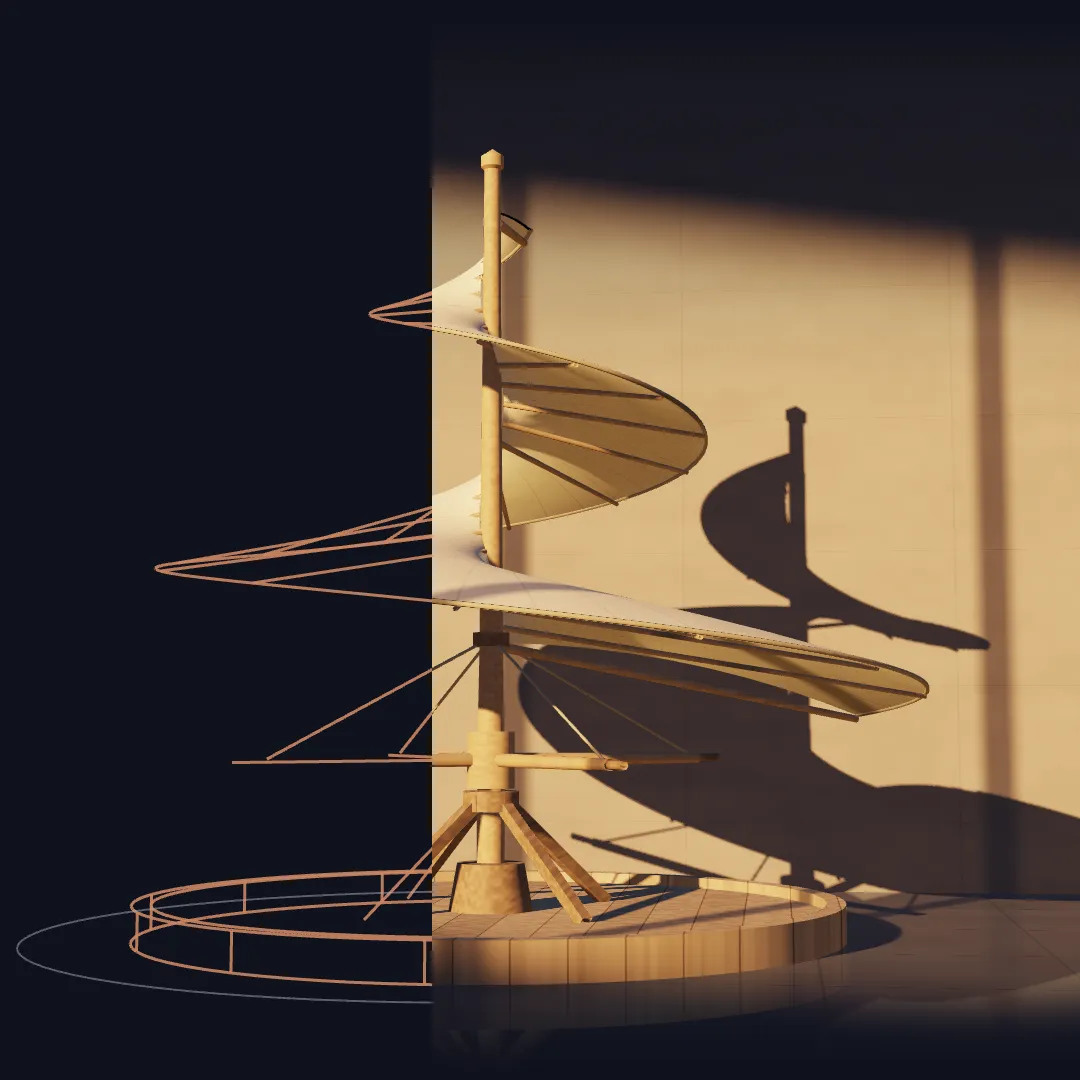
Here it is the aerial screw.
The sheet asks whether a turning surface can bite into air the way a screw bites into wood.
The stop
His age: about 30
In Milan he drew machines like these. He wanted to fly. Nobody wrote down that he ever did.
His offer to Milan’s ruler, Ludovico Sforza, survives as a draft. Nobody knows if it was sent. He drew this screw later, about 1487 to 1489. The sheet gives one size: eight braccia, about 4.7 metres, rim to middle. To lift itself it needs at least nineteen kilowatts, we estimate. Four top cyclists make about two for an hour.
Reconstructed from Ms B f. 83v. No lifetime flight is documented. The holder identifies this sheet as Ms 2173, f. 83v. Leonardo da Vinci drew a screw-shaped surface. His note names linen sealed with starch, cane supports and an iron wire rim.
Manuscript B, folio 83 verso, that is leaf 83, the back. The holder's number: Ms 2173. About 1487 to 1489.
The title and the three texts are the museum's own words.
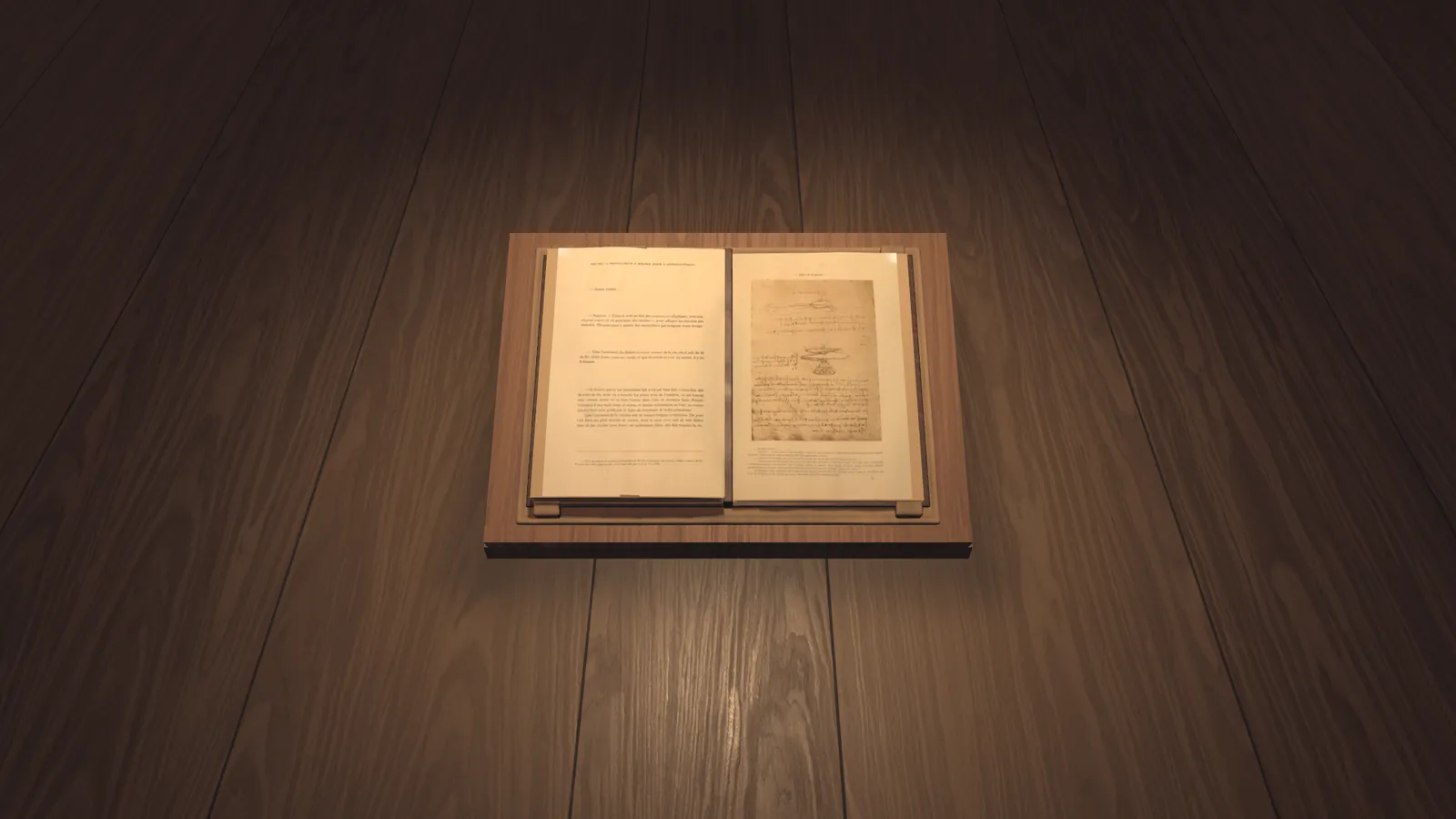
On the reading table lies a printed copy of 1883 of two of his notebooks. You can turn all its 438 pages, and 188 of them show the notebooks' own sides, in his mirror writing from right to left.
17 topics gather 207 pages from his notebooks. A shelf holds seven more books of his notes to turn, 1,158 sides in all.
A side is one face of a leaf.
The topicspages
The shelfsides
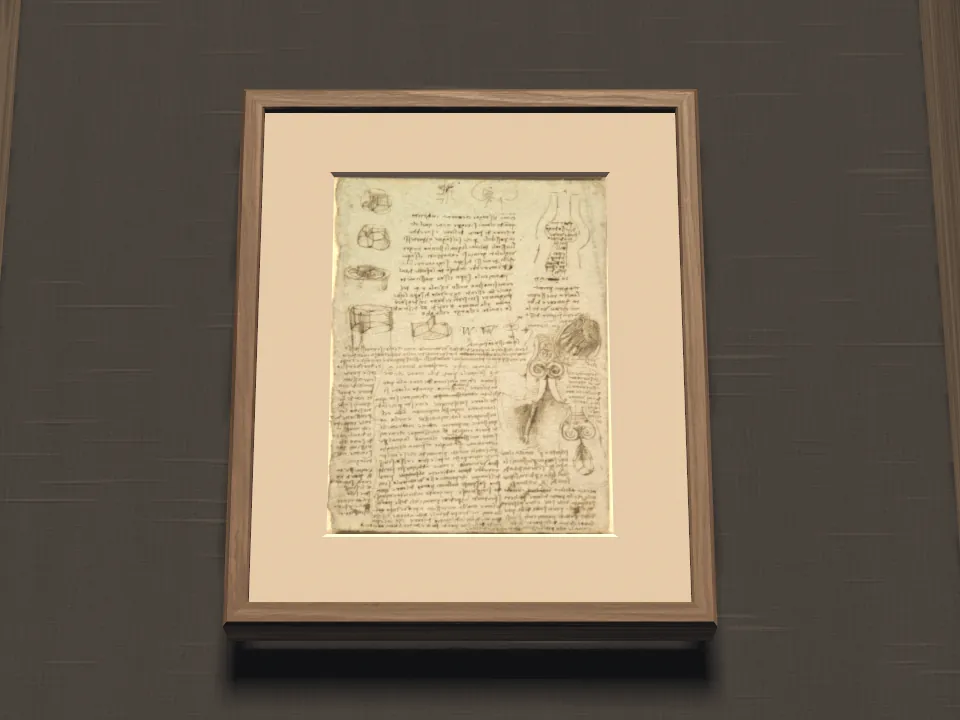
On a wall of the long gallery hang 29 of his anatomy sheets, reproductions of originals in the Royal Collection at Windsor.
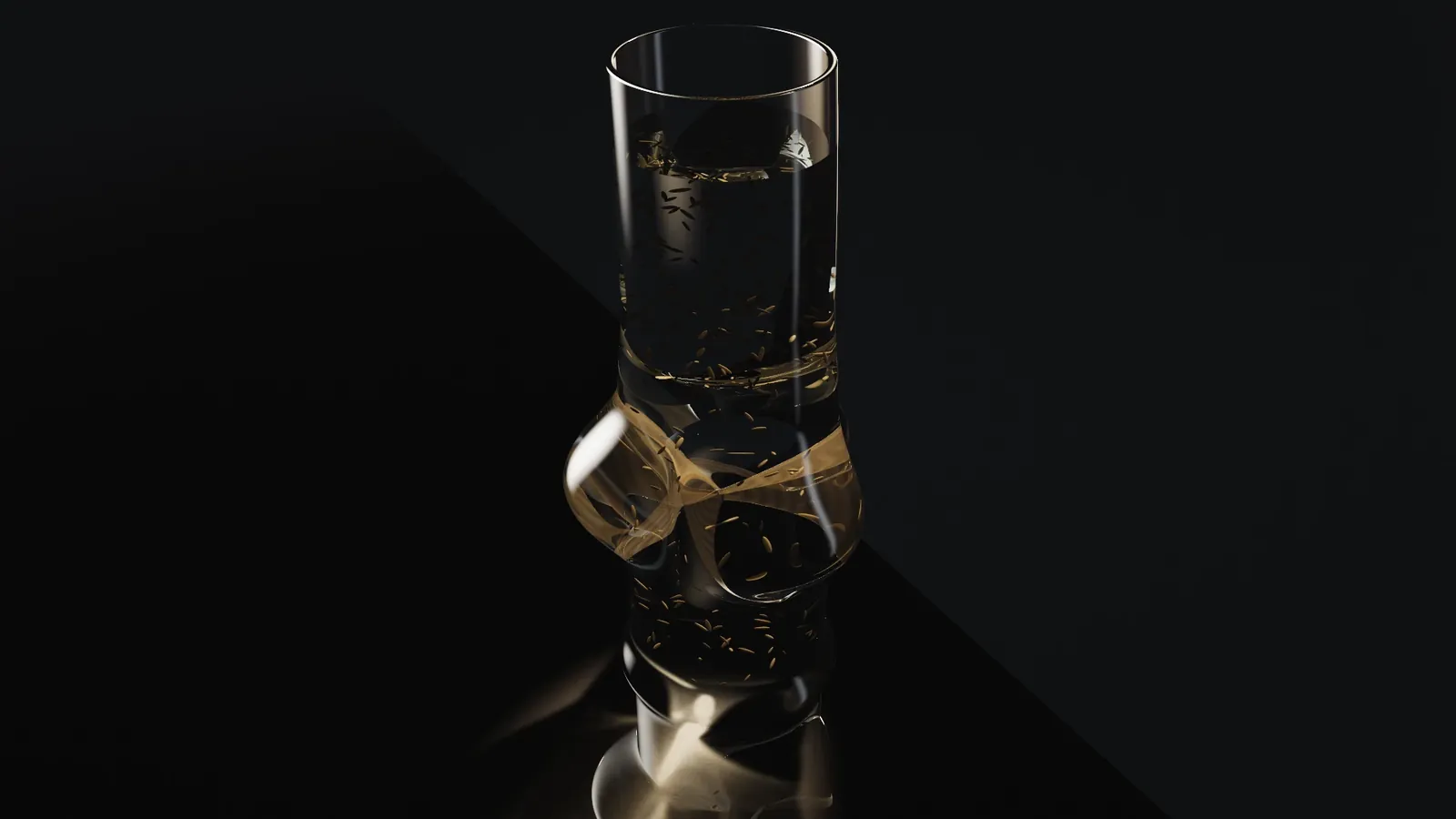
One sheet hangs apart: the heart valve. He drew the flow curling behind its flaps, and the curls help shut the valve, as he wrote. At its stop a film of about 30 seconds shows that in the museum's own glass model, built from his notes.
The timeline of his life holds 56 dates. Twelve of them are cut into the floor of the long gallery, and a date in the floor opens the timeline there.
It is told in seven parts and names seven people around him, from his teacher to the king of France.
The parts
The people
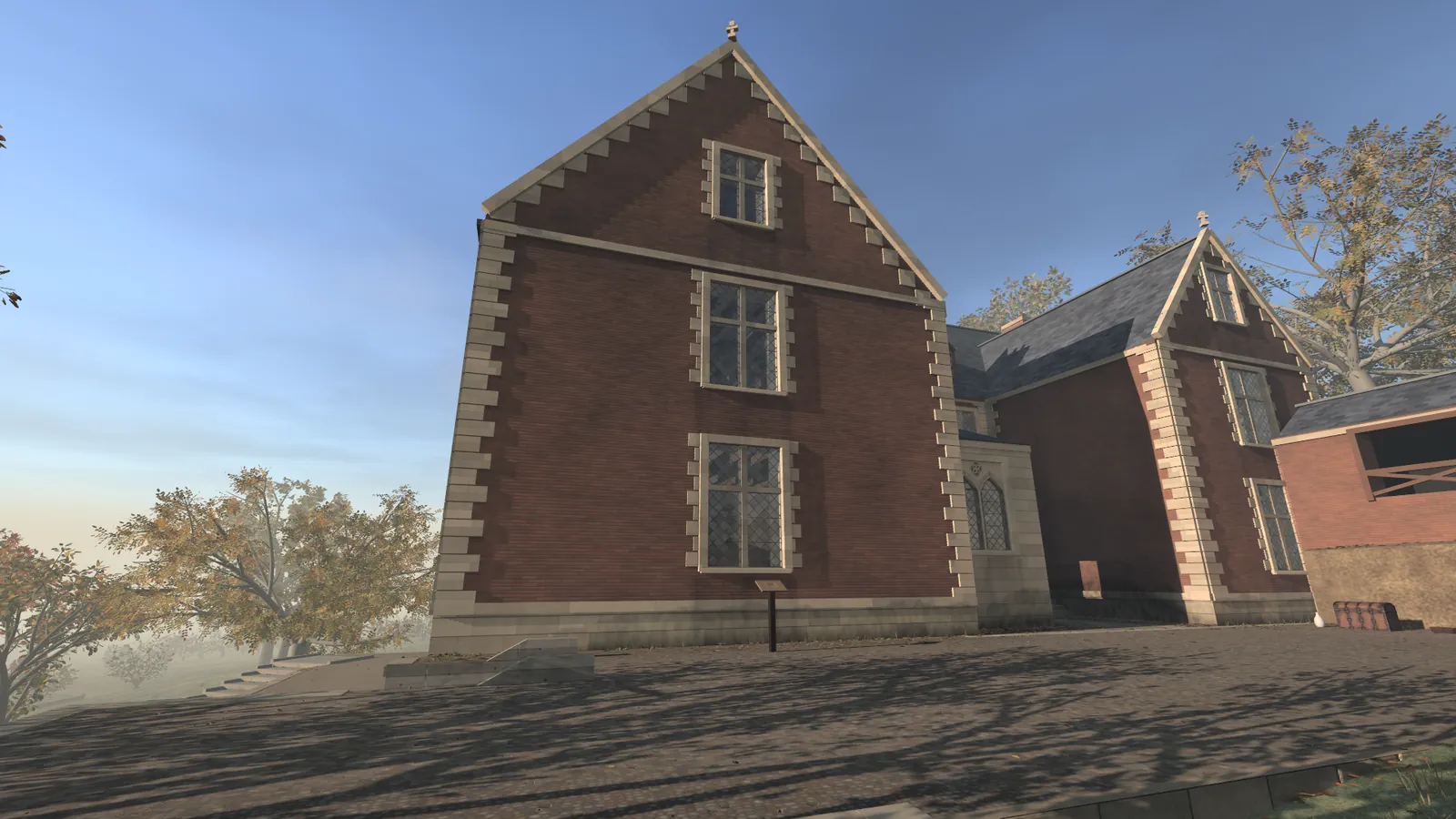
Room by room: what the sources give, and where the wing made a choice.
In the order the walk meets them:
The museum names these museums, libraries and collections because they hold the originals, and for no other reason. It is independent of every one of them.
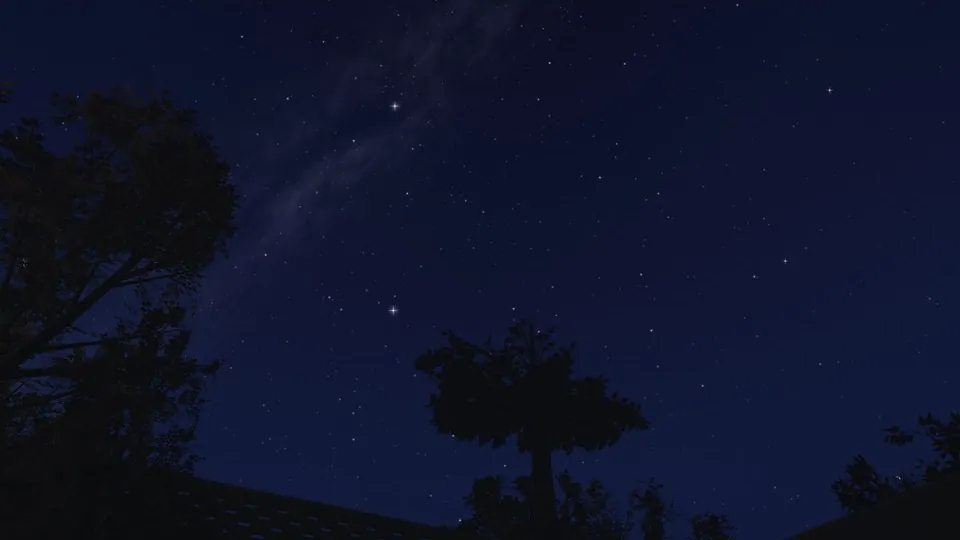
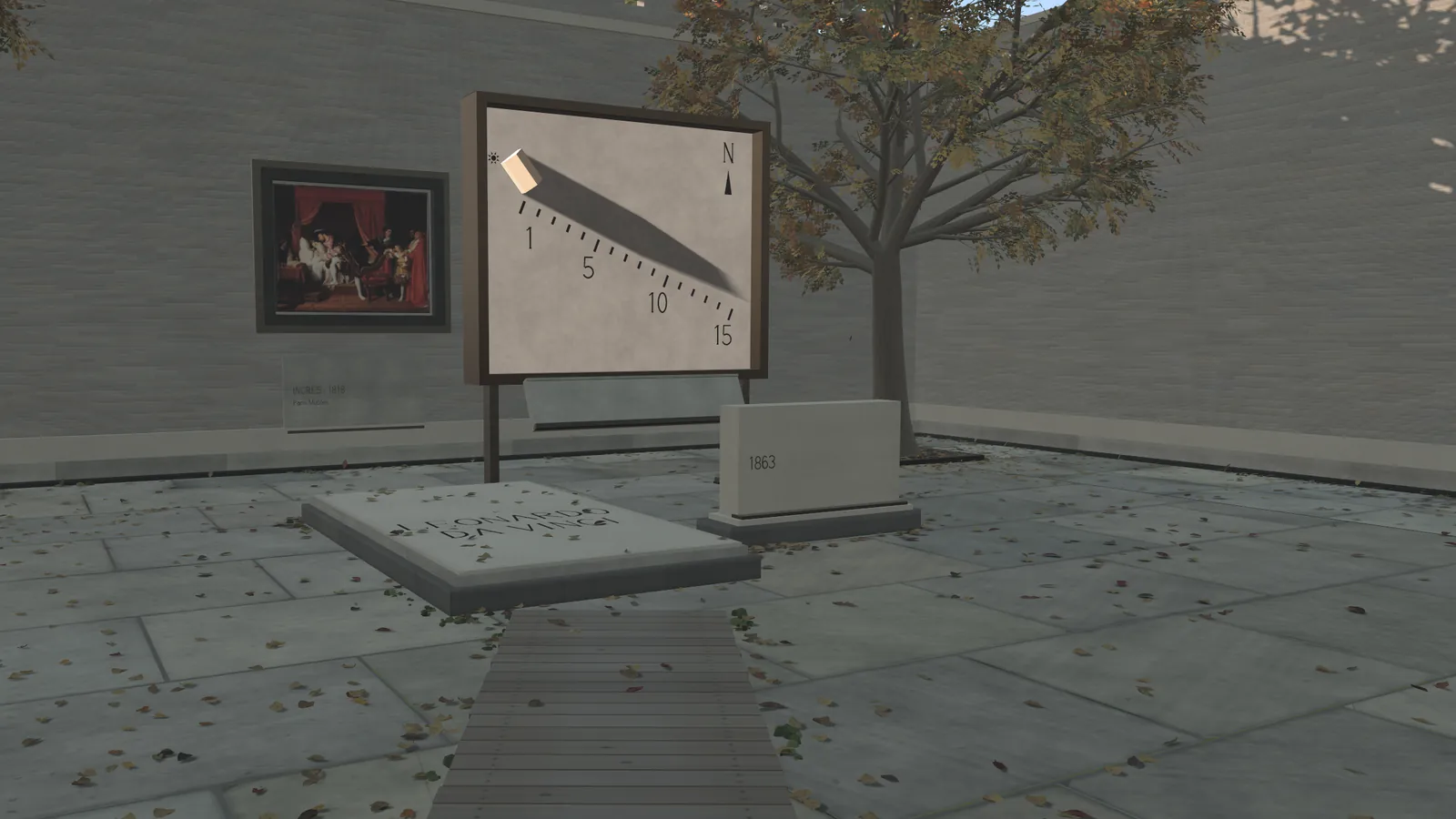
At the last stop, the grave court, it gets dark and you look up. The stars stand as they stood over Clos Lucé at nine in the evening of 10 October 1517. They are worked out star by star from a star catalogue, for the day the diary gives and the hour we chose. The sunset shows a usual October evening, not that one, and the shooting star is the museum's own.
Free entry, no account.
You have seen the wing, or you are about to. Here is where to read on.