The mechanism hall
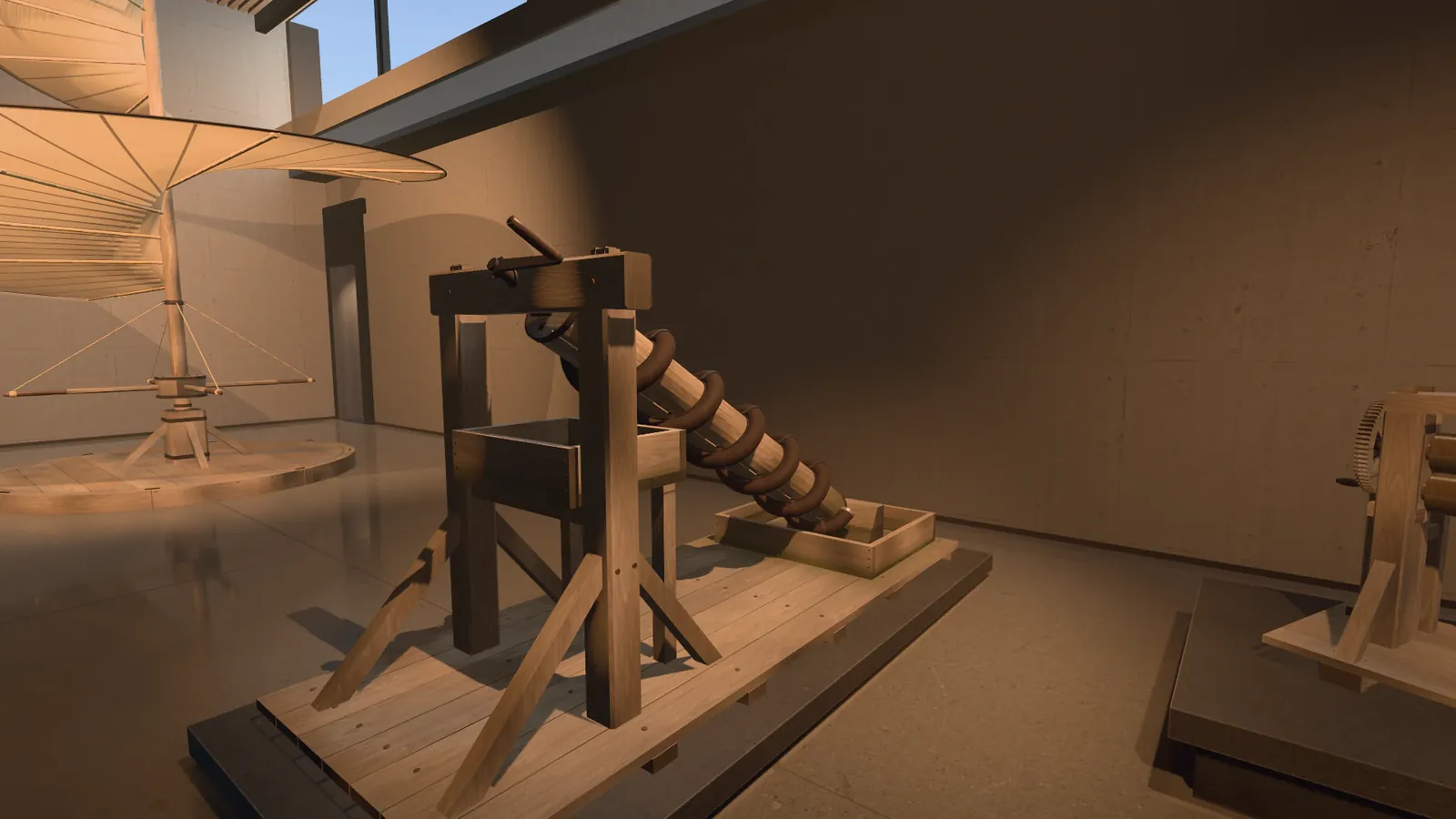
Nine machines: the aerial screw, lock gates, a water screw, a rolling mill, a drilling machine, a ball bearing, a flywheel, a camera obscura and an organ gun.
Leonardo da Vinci drew machines to fly, to raise water, to measure and for war. Most he never built, as far as anyone knows. Some were not his idea. Fifteen stand in this museum, rebuilt in code.
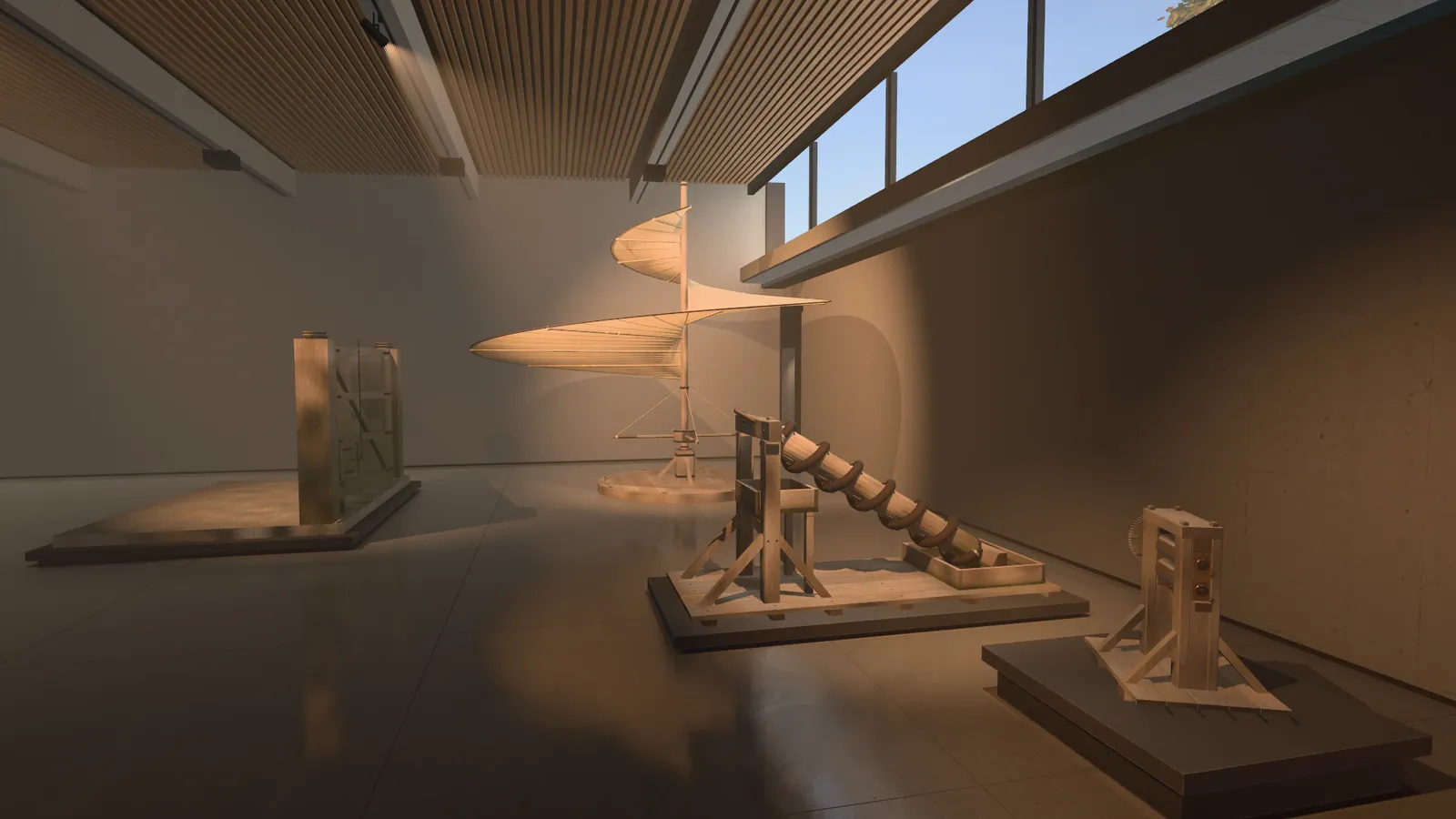
Free entry, no account.
The door opens the Leonardo wing at its beginning. The plan of the wing takes you to the mechanism hall.
Museum of Ages is a digital museum. Its first wing is Leonardo da Vinci's, and its machines stand in three places. The plan of the wing lists each machine under the place where it stands. Press a name there, and that machine's close look opens.
Nine machines: the aerial screw, lock gates, a water screw, a rolling mill, a drilling machine, a ball bearing, a flywheel, a camera obscura and an organ gun.
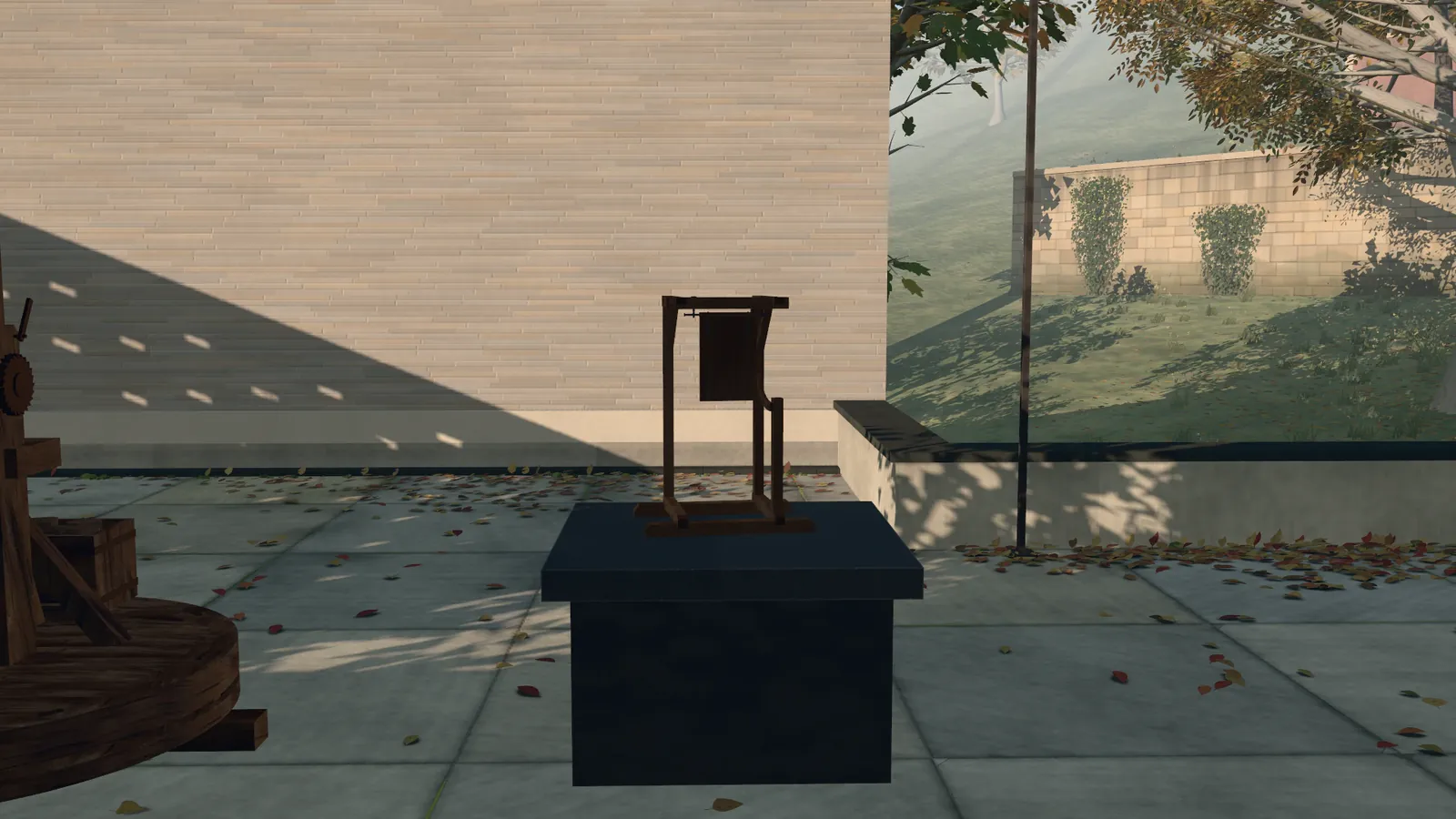
Three machines: the parachute, the revolving crane and the anemometer. The parachute stands outside because it is taller than the hall's roof.
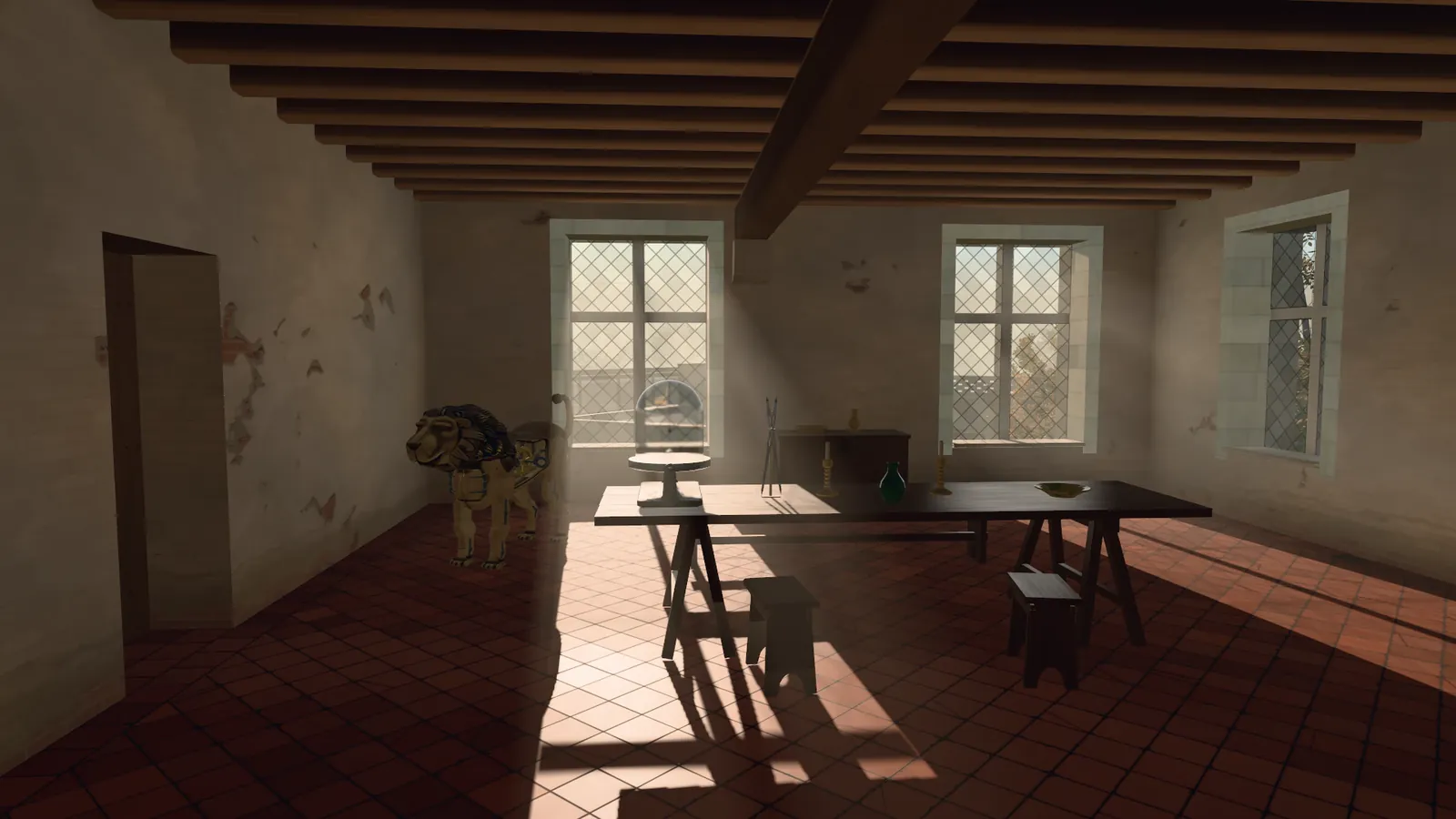
Three in its great hall: an inclinometer and a proportional compass on the table, and the mechanical lion by the wall.
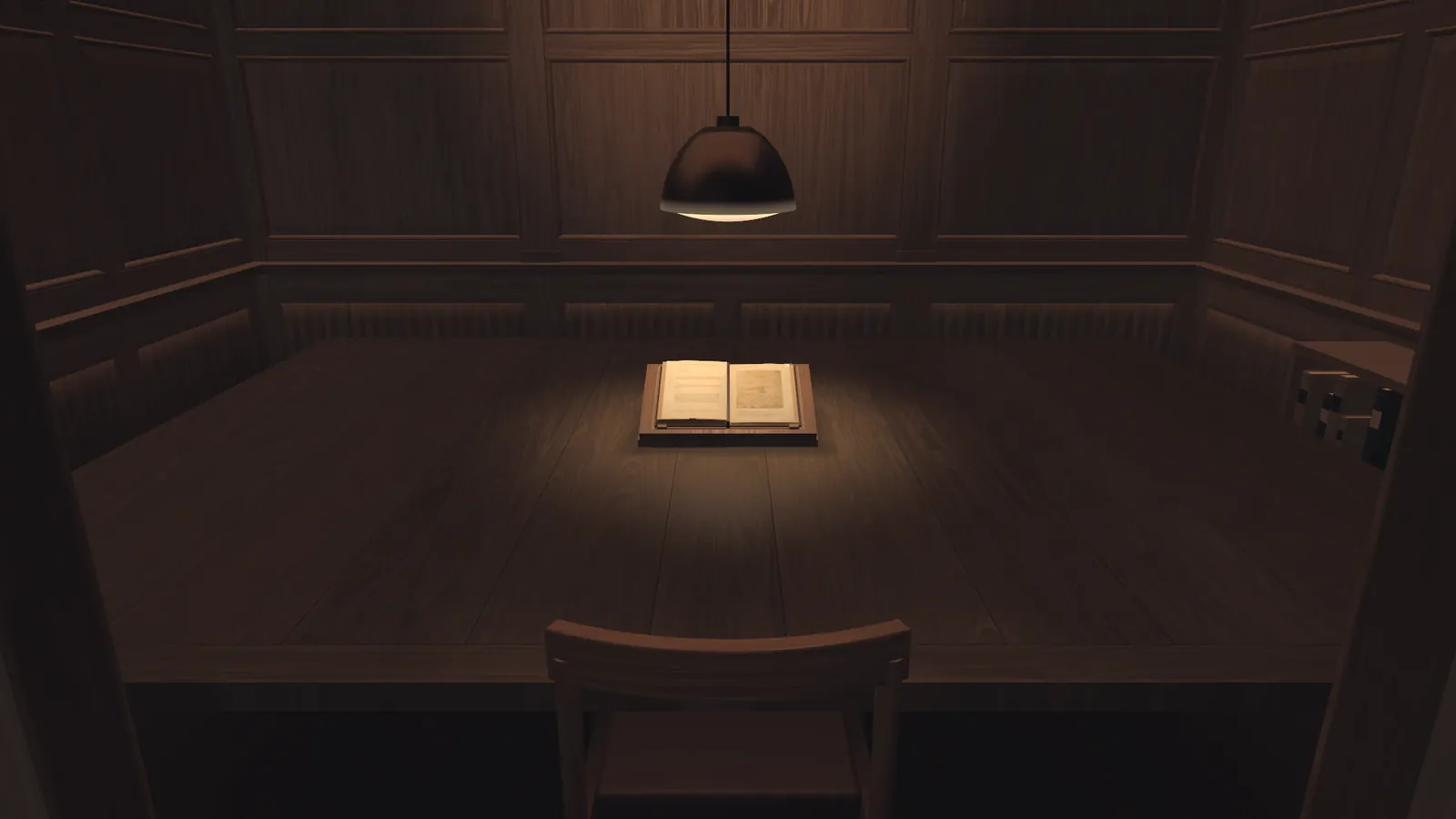
Here you turn through more than 200 pages of his notebooks, sorted into seventeen topics, Flight and Machines among them. Each page names its notebook and leaf, and you can read it in his hand, in a mirror and as text. At rest a facsimile of Manuscript B, printed in 1883, lies open. The aerial screw's sheet, folio 83 verso, is in that facsimile.
Fourteen of the fifteen follow one of his sheets. The lion follows old accounts, because no drawing of it survives. Each is labelled as a reconstruction.
Leonardo wanted people to fly. No flight of his own is documented. Two of his studies for flight stand rebuilt here, with an instrument he meant for a flier.
In the museum: Mechanism hall
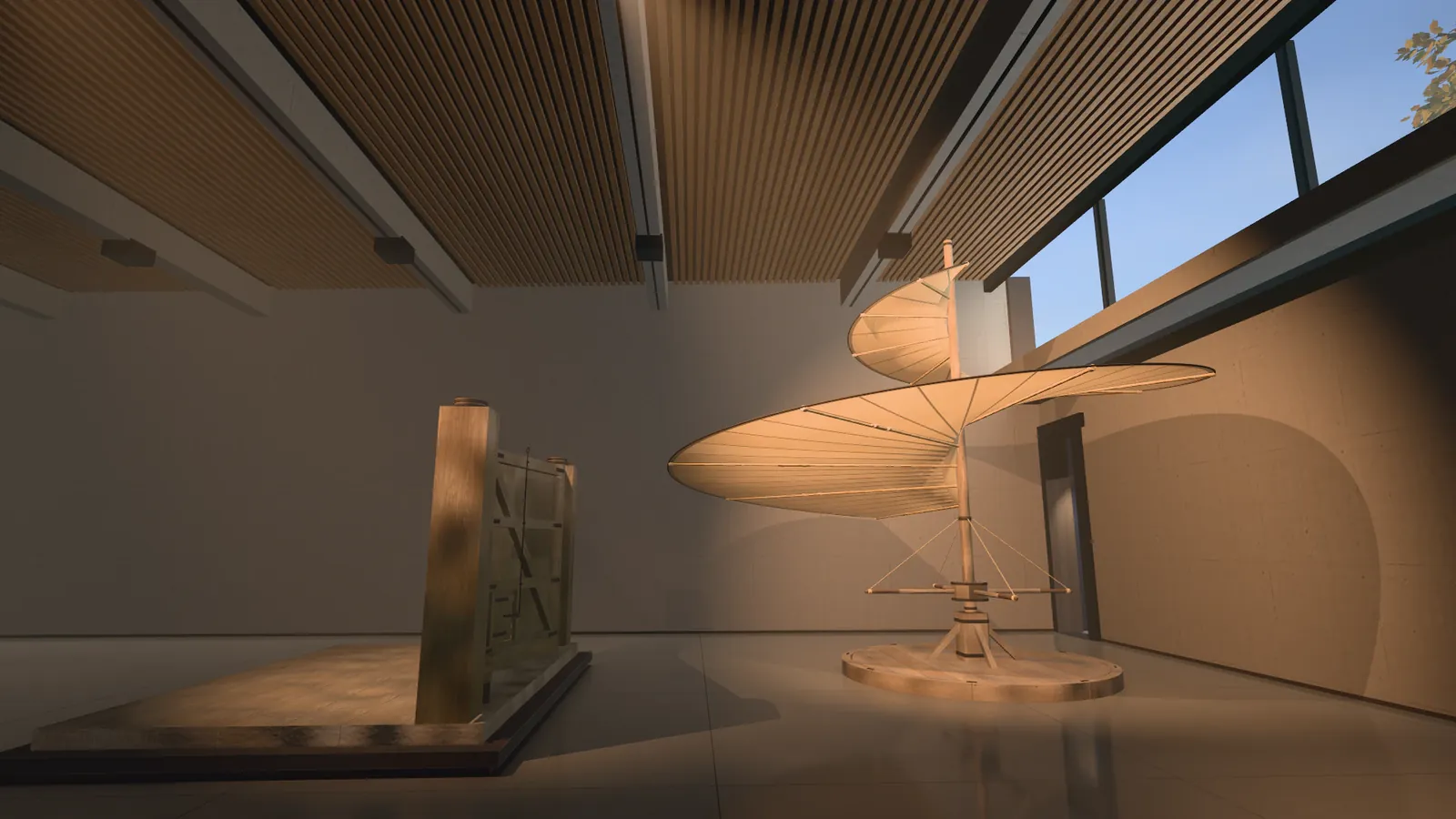
A spiral sail of linen on a mast, often called his helicopter. His note says that a screw made well, of linen sealed with starch and turned fast, will rise into the air.
In the museum: The court
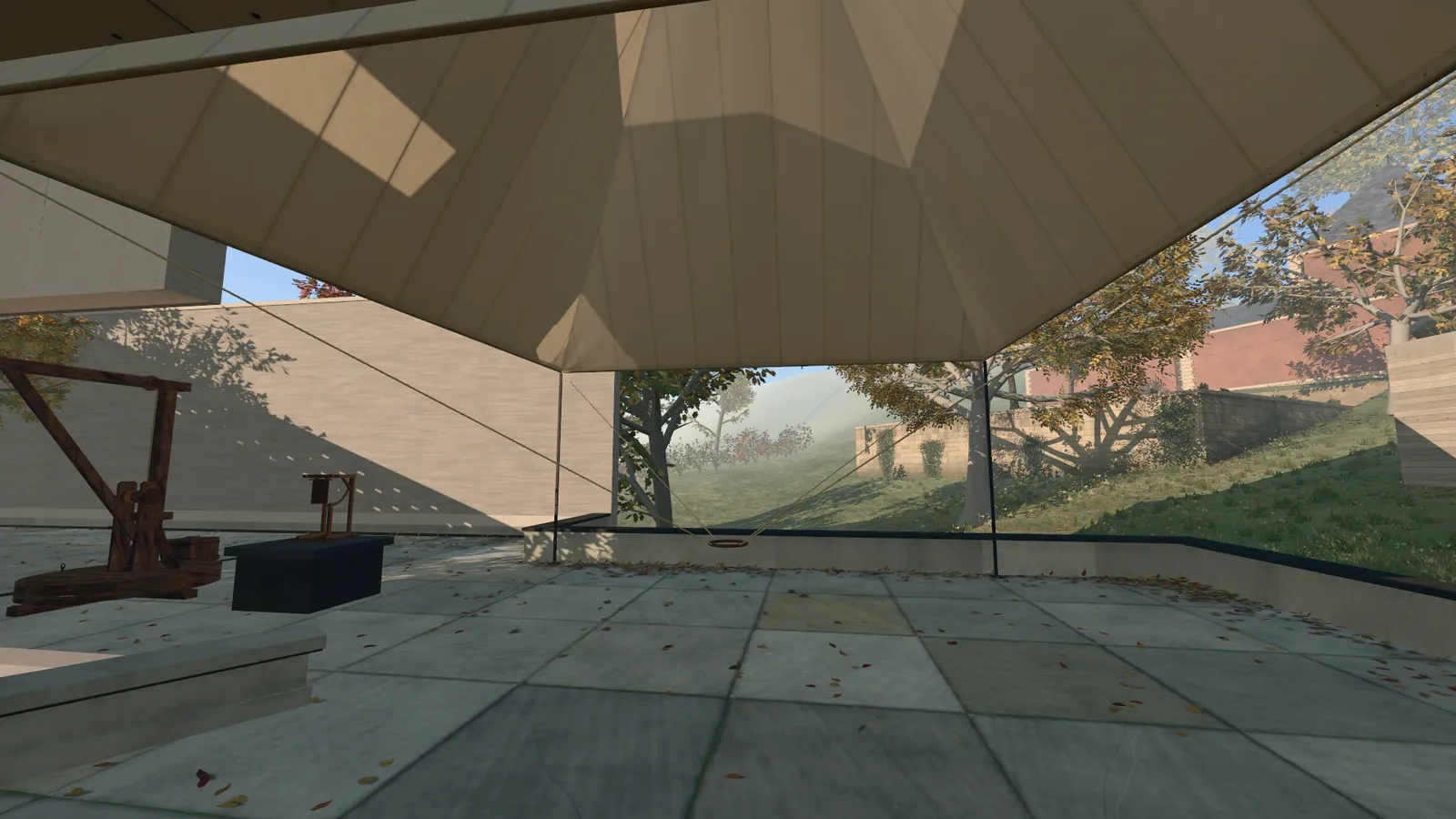
A tent of sealed linen, twelve braccia across and twelve high, about seven metres each way. He claimed a man could drop under it from a great height unhurt. That is his claim, not a tested finding.
In the museum: The house, on the table
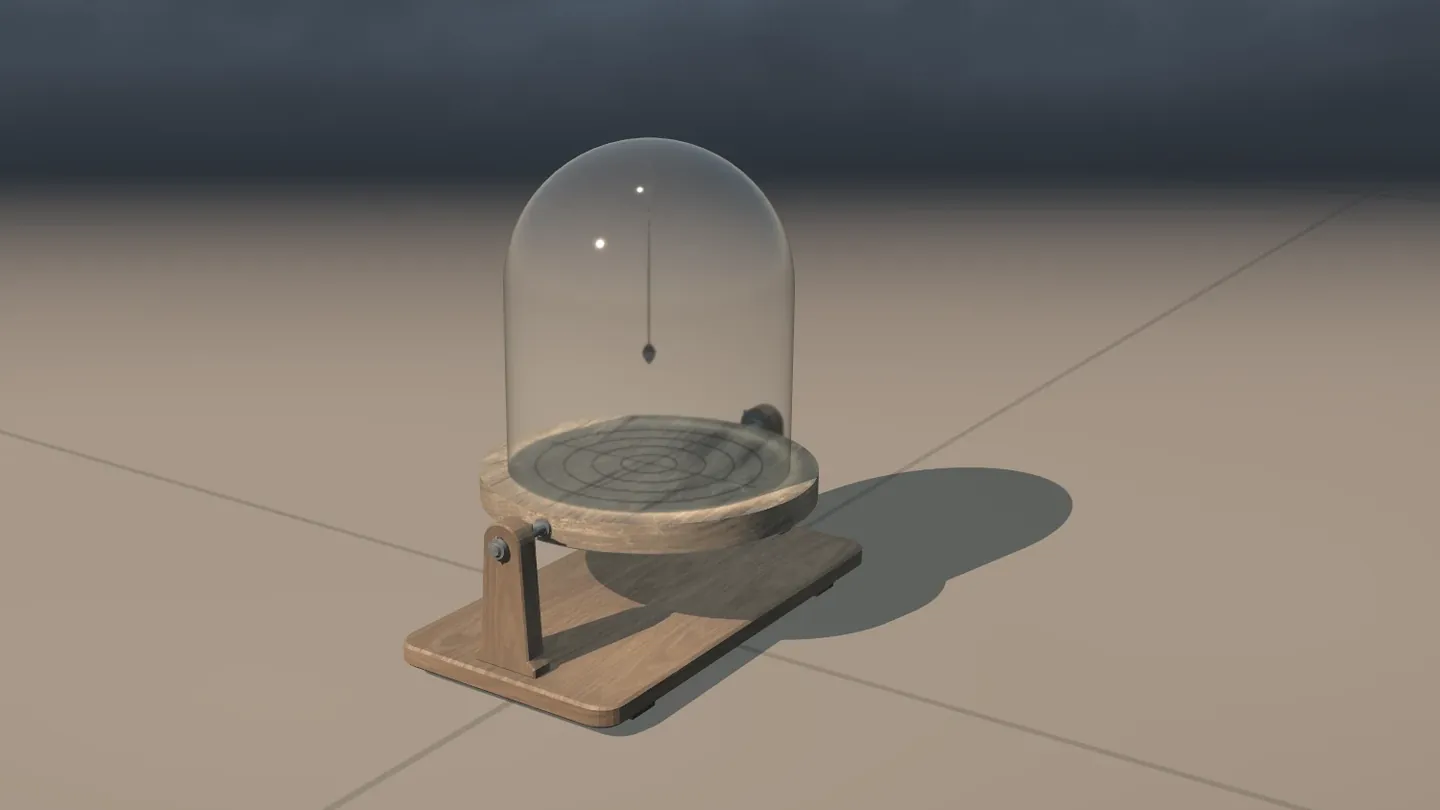
A weight hanging over a circle, shielded from the wind. It was meant to show a flier whether he travels level or tilted.
He drew machines for water too. Canal locks and the water screw were in use before he was born. Reference works often credit him with one part: the lock gate of two leaves that meet at an angle.
In the museum: Mechanism hall
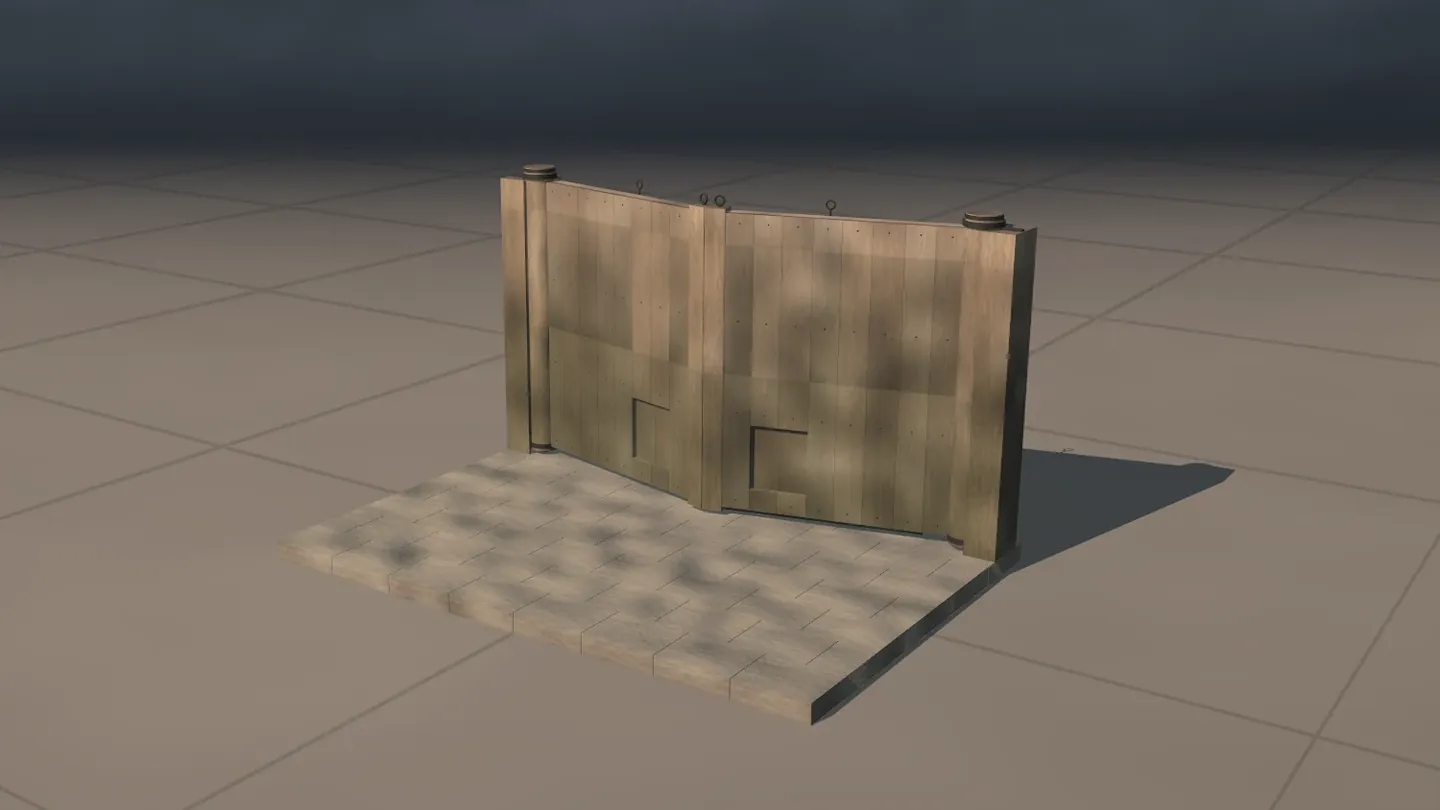
Two leaves of a canal lock that meet at an angle. The higher water presses them shut, and a small door in each leaf lets water through first, so a boat can pass from one level to the next.
In the museum: Mechanism hall
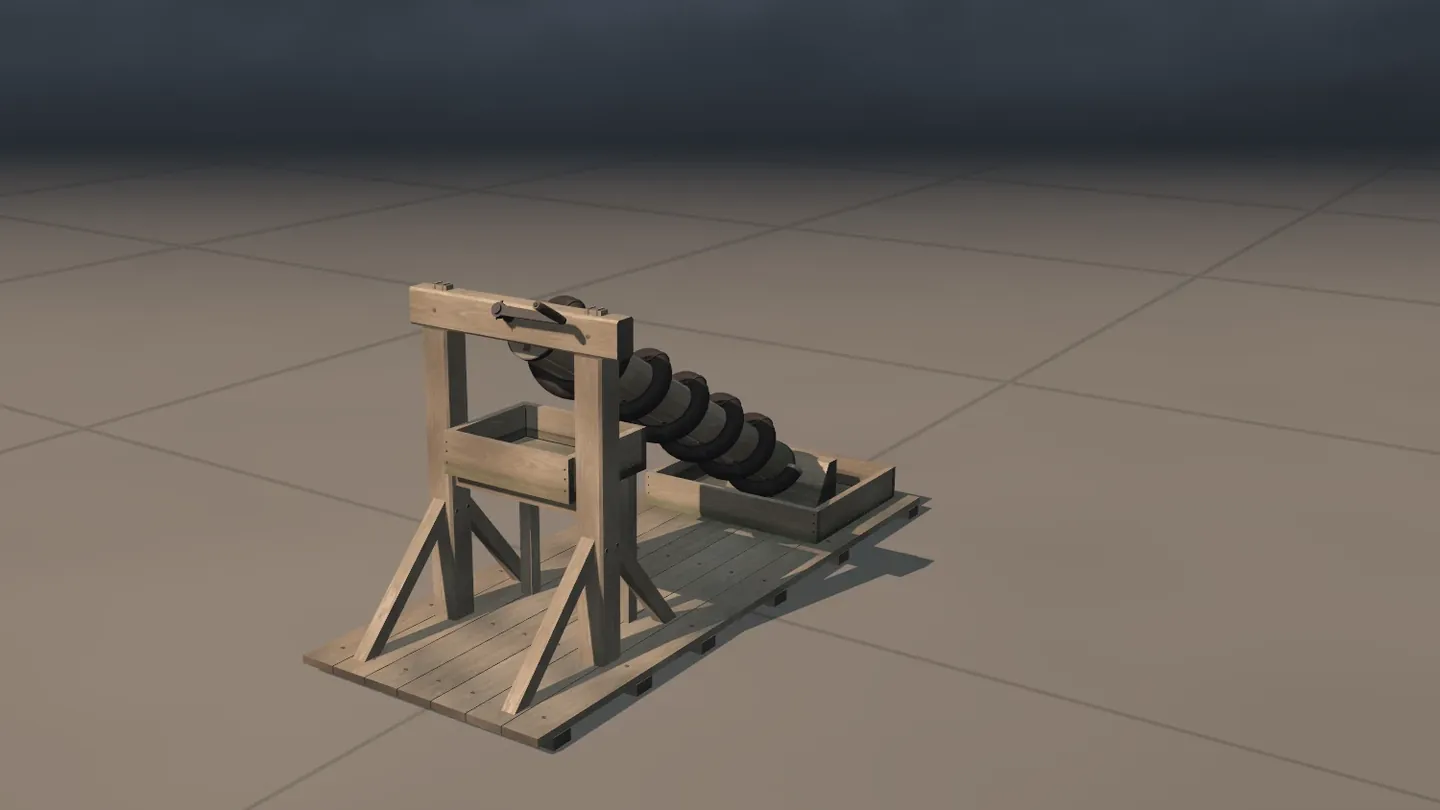
A tube wound round a shaft. Each turn of the crank lifts water up the tube to a higher channel or cistern.
These five lift, roll, drill and turn. For none of them is a build in his lifetime verified.
In the museum: The court
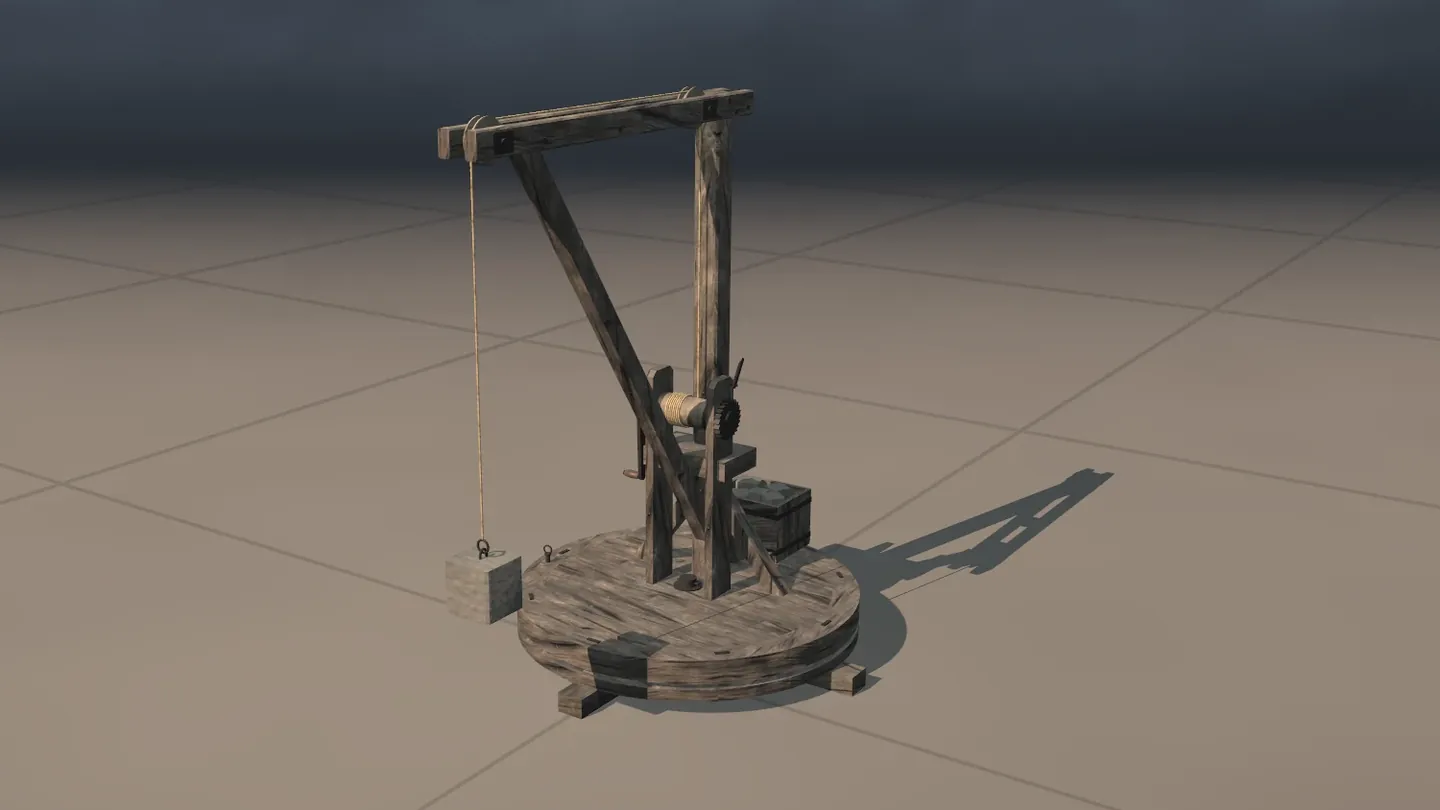
A crane with one jib. A hand crank winds the rope onto a drum, and the jib swings the load round to where it is wanted.
In the museum: Mechanism hall
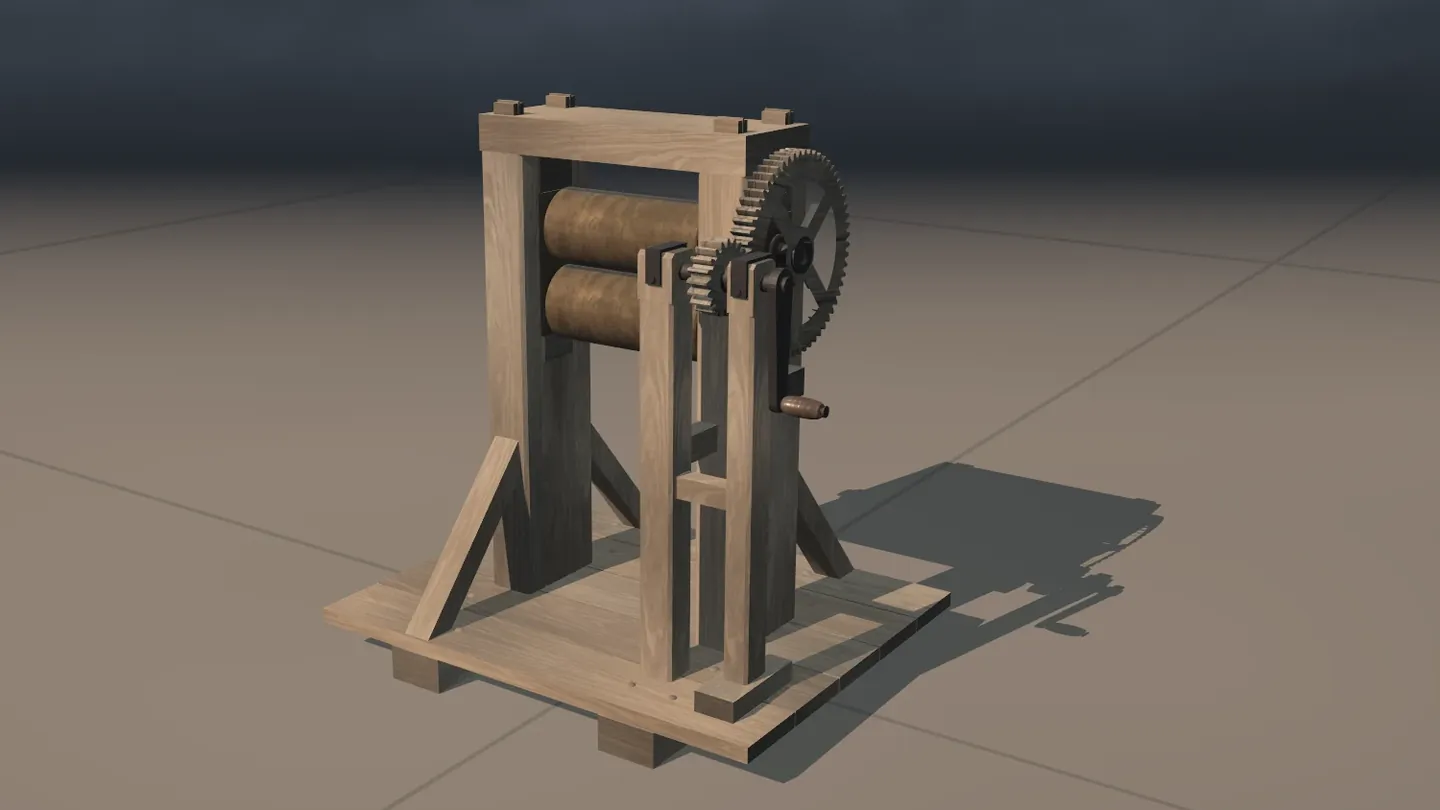
Two rollers that press tin thinner and more even. A crank drives the upper roller, and moving the lower one changes the gap.
In the museum: Mechanism hall
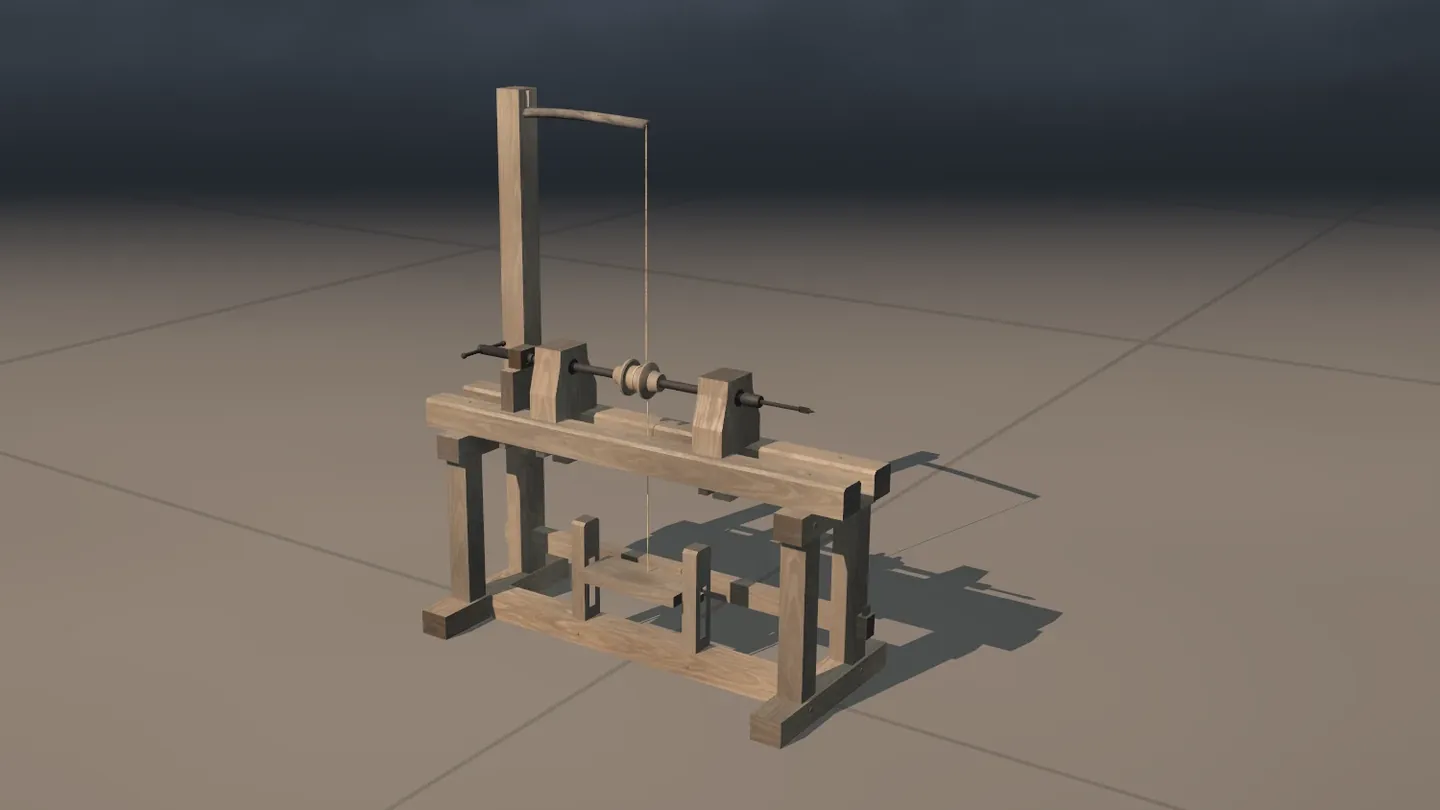
A drill driven by a body, without a motor. A rope is wound round the spindle, so a stroke of the foot turns it one way and a bent bow turns it back. The sheet carries no note on the drill. A museum in Vinci reads the drawing this way, and our model follows that reading.
In the museum: Mechanism hall
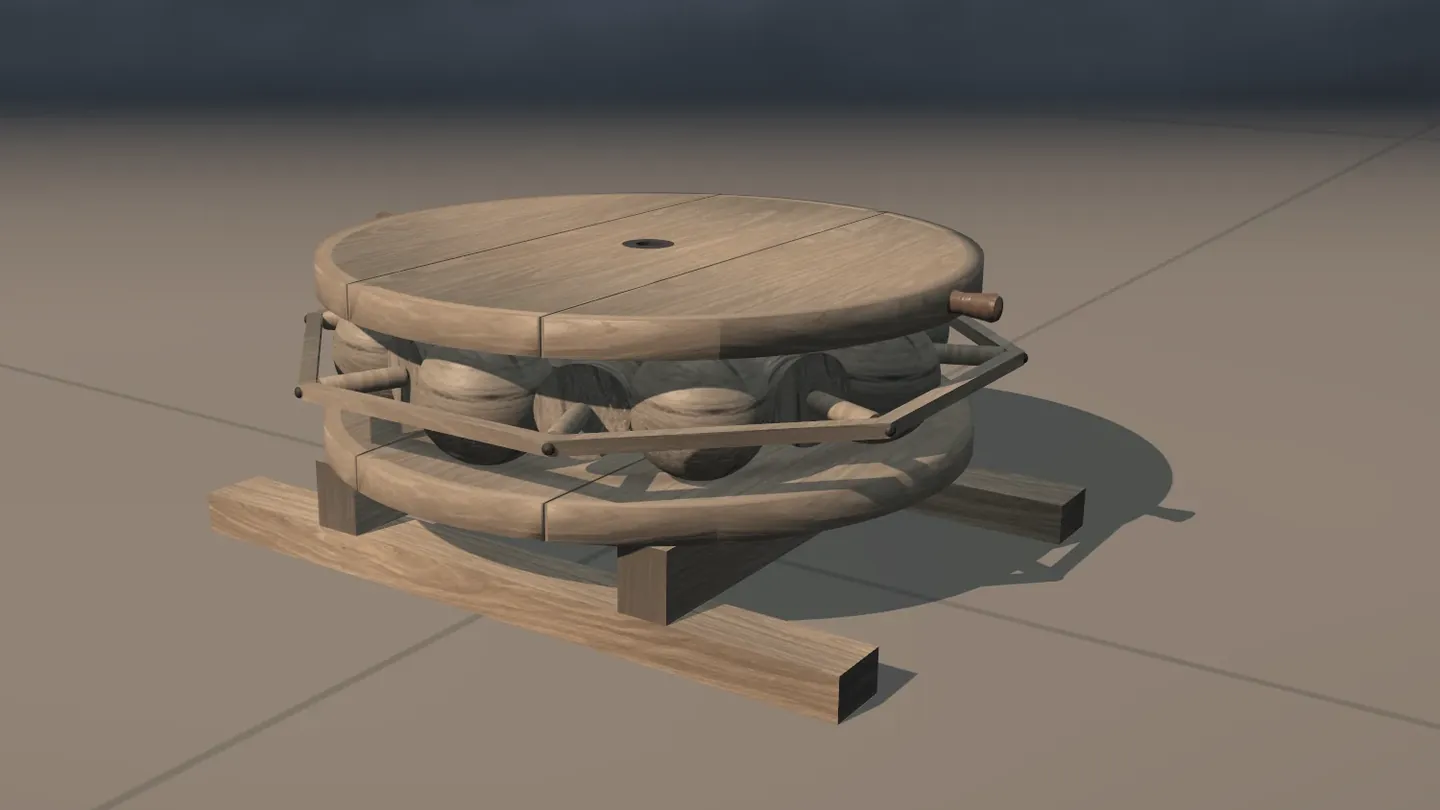
Eight wooden balls between two plates, so a heavy load rolls as it turns and rubs less. Small wheels on pivots keep each ball from touching the next.
In the museum: Mechanism hall
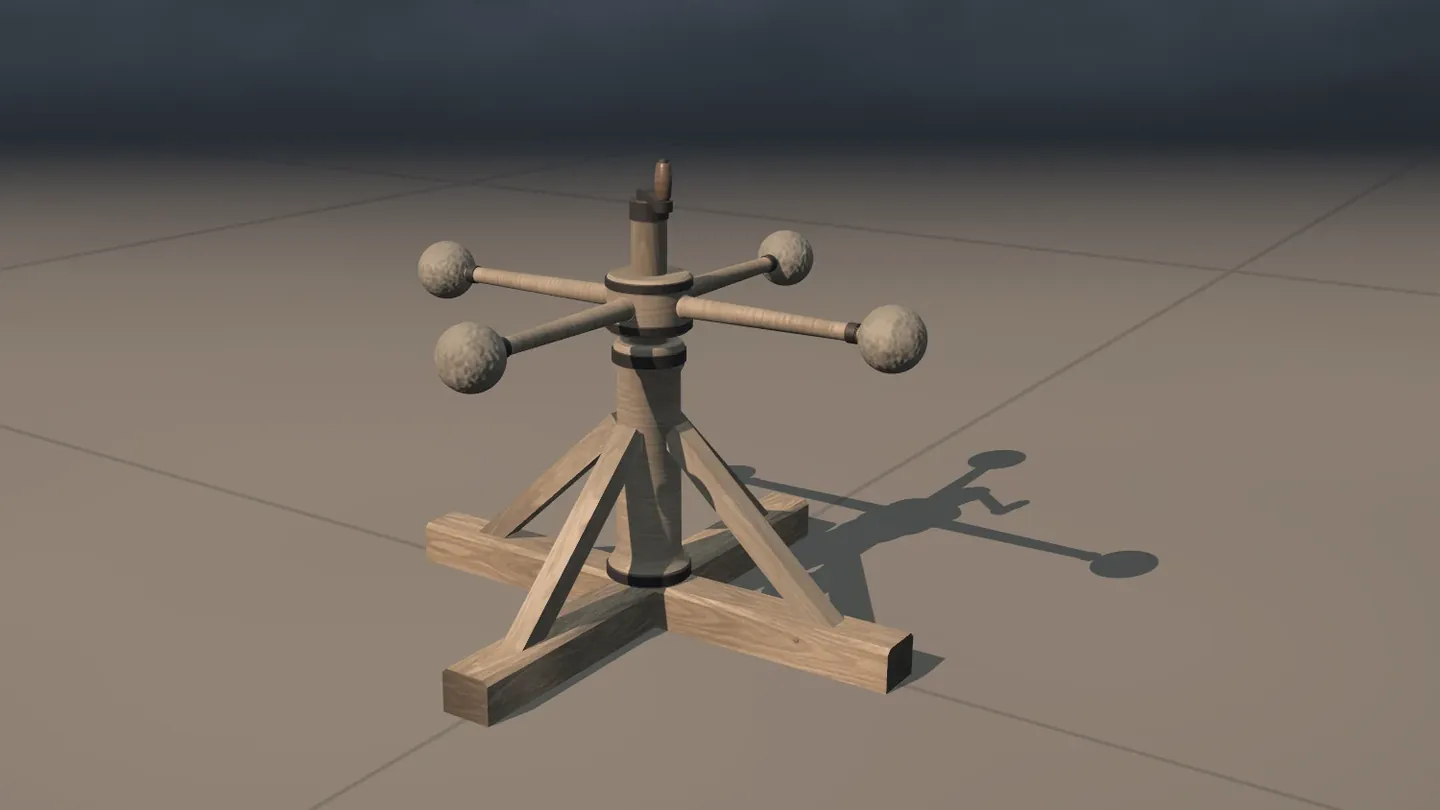
A heavy wheel that stores movement and gives it back when the drive falters. The sheet compares turning weights and asks which arrangement runs best.
Three smaller pieces. One reads the wind, one changes the size of a drawing, one shows what light does on its way into a dark room.
In the museum: The court
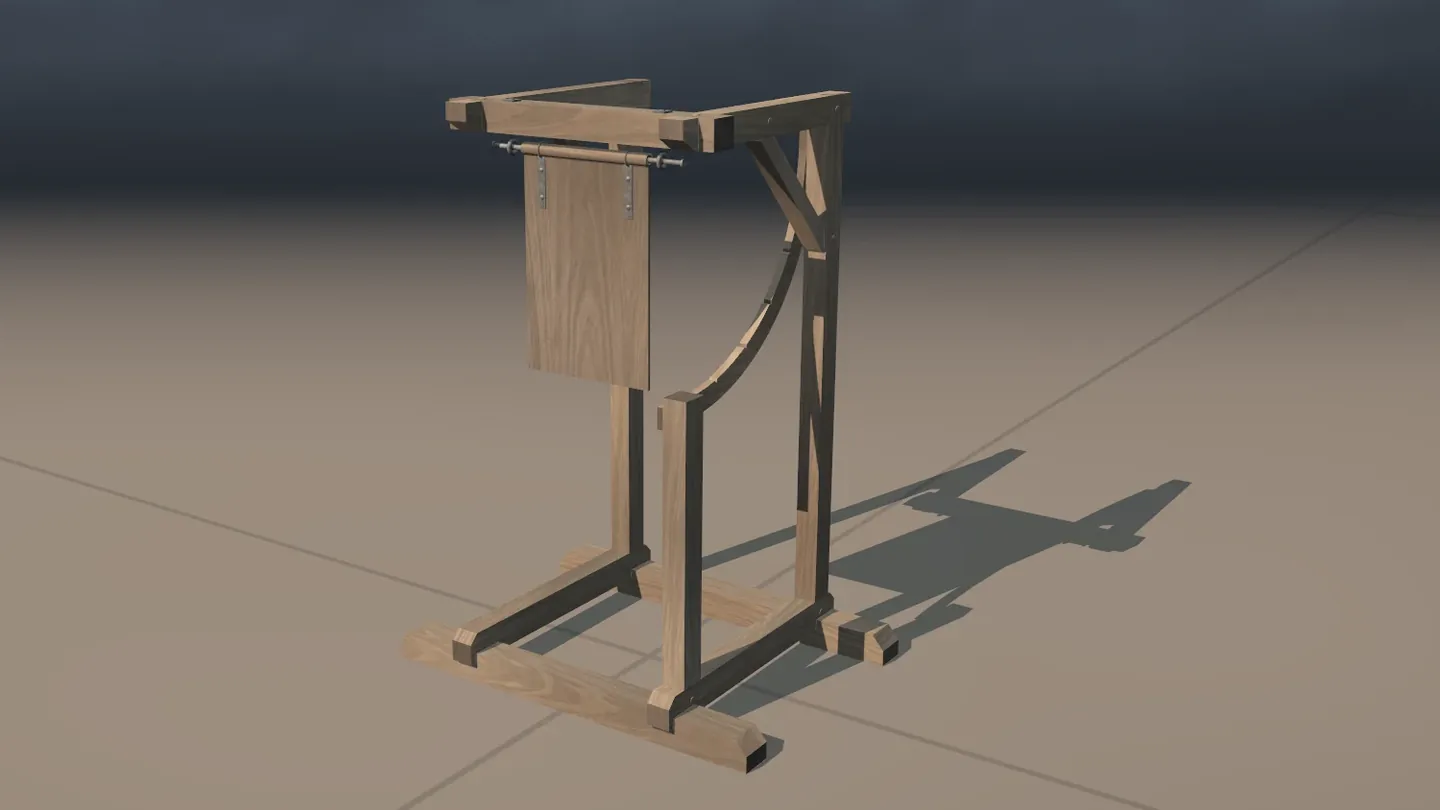
Wind pushes a hinged plate out of the upright. The higher it rides on its curved scale, the harder the wind. His note wants more: to measure how far one travels in an hour with a wind, and for that it asks for a clock. The plate alone shows only the wind's force.
In the museum: The house, on the table
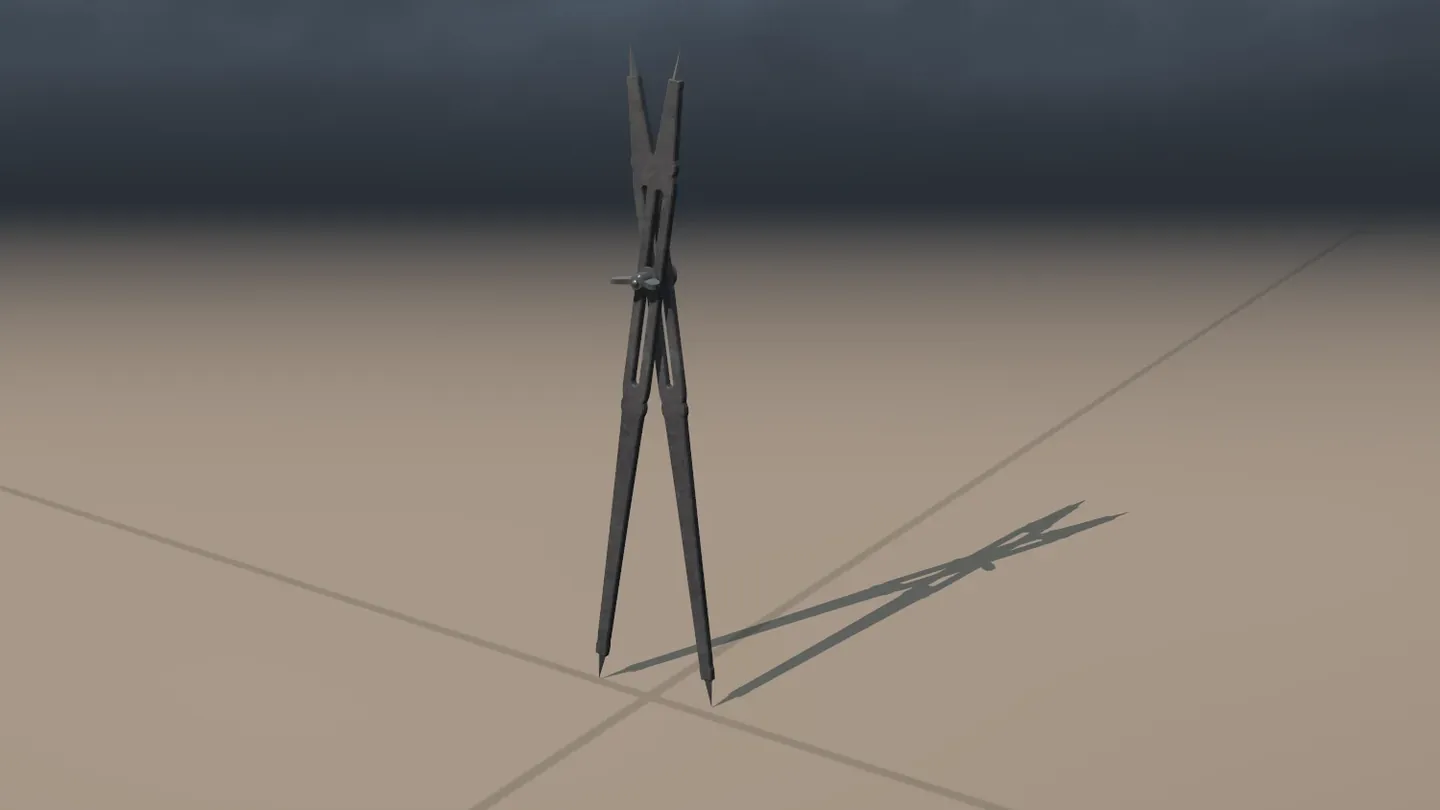
Two pointed legs that cross at a pivot. It carries a distance across at a chosen proportion, which is how a drawing is made larger or smaller.
In the museum: Mechanism hall
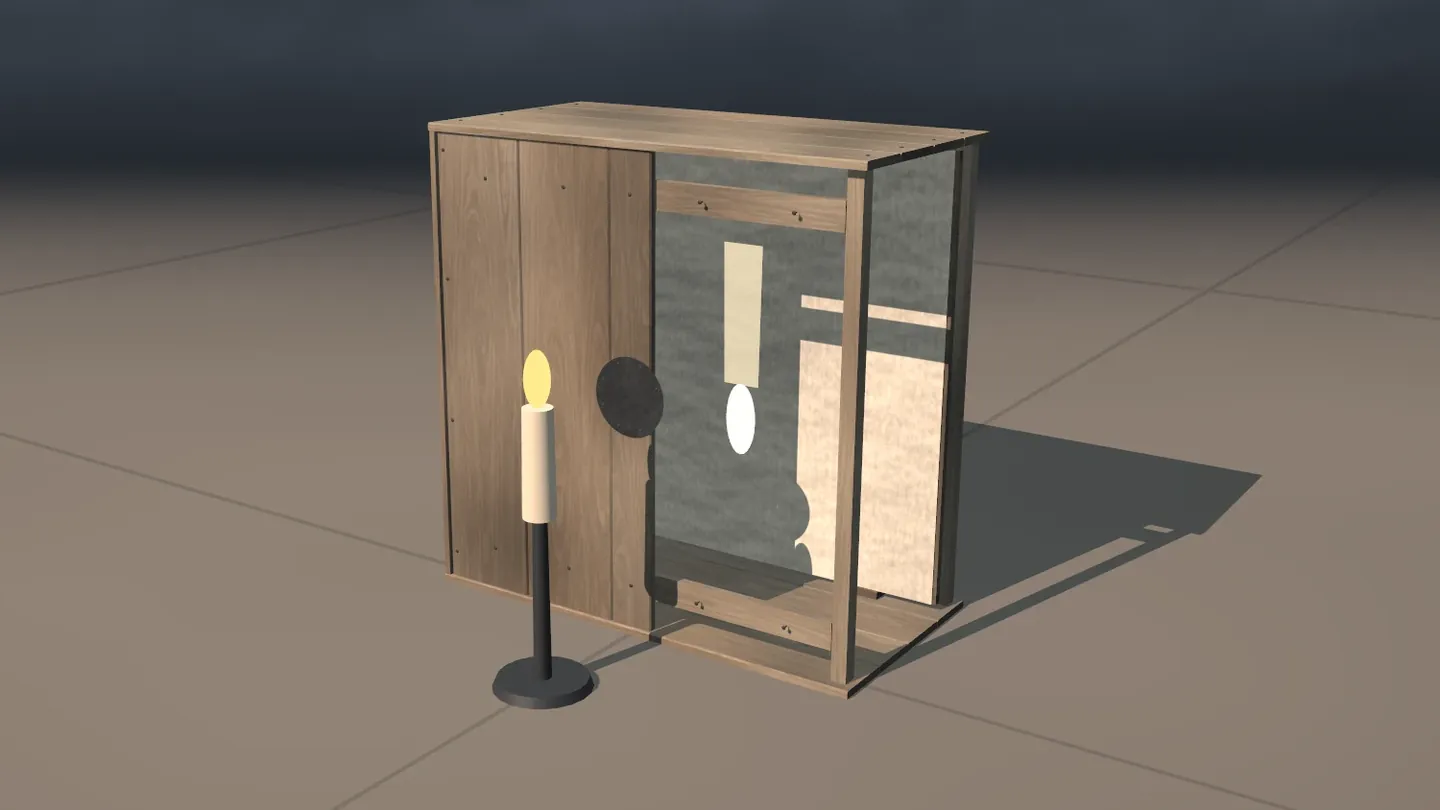
A dark room with one small hole. The rays of light cross in the hole and put the picture on paper upside down. He was studying how the eye sees.
One war machine stands in the hall, as a display that cannot fire.
In the museum: Mechanism hall
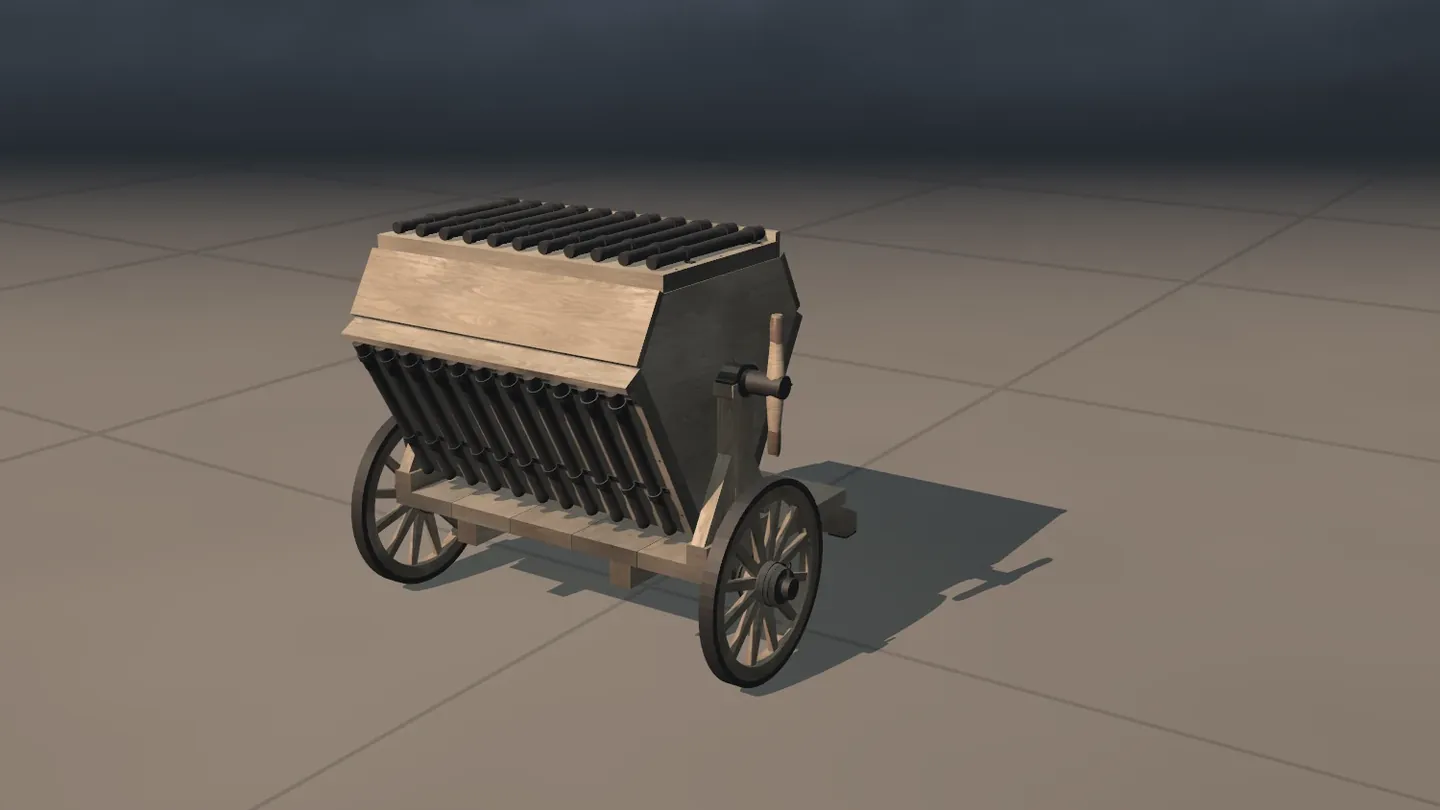
Thirty-three barrels in three rows on one frame. His note says eleven are fired at a time. Turning the frame brings the next row to the top.
In the museum: The house, by the wall of the great hall
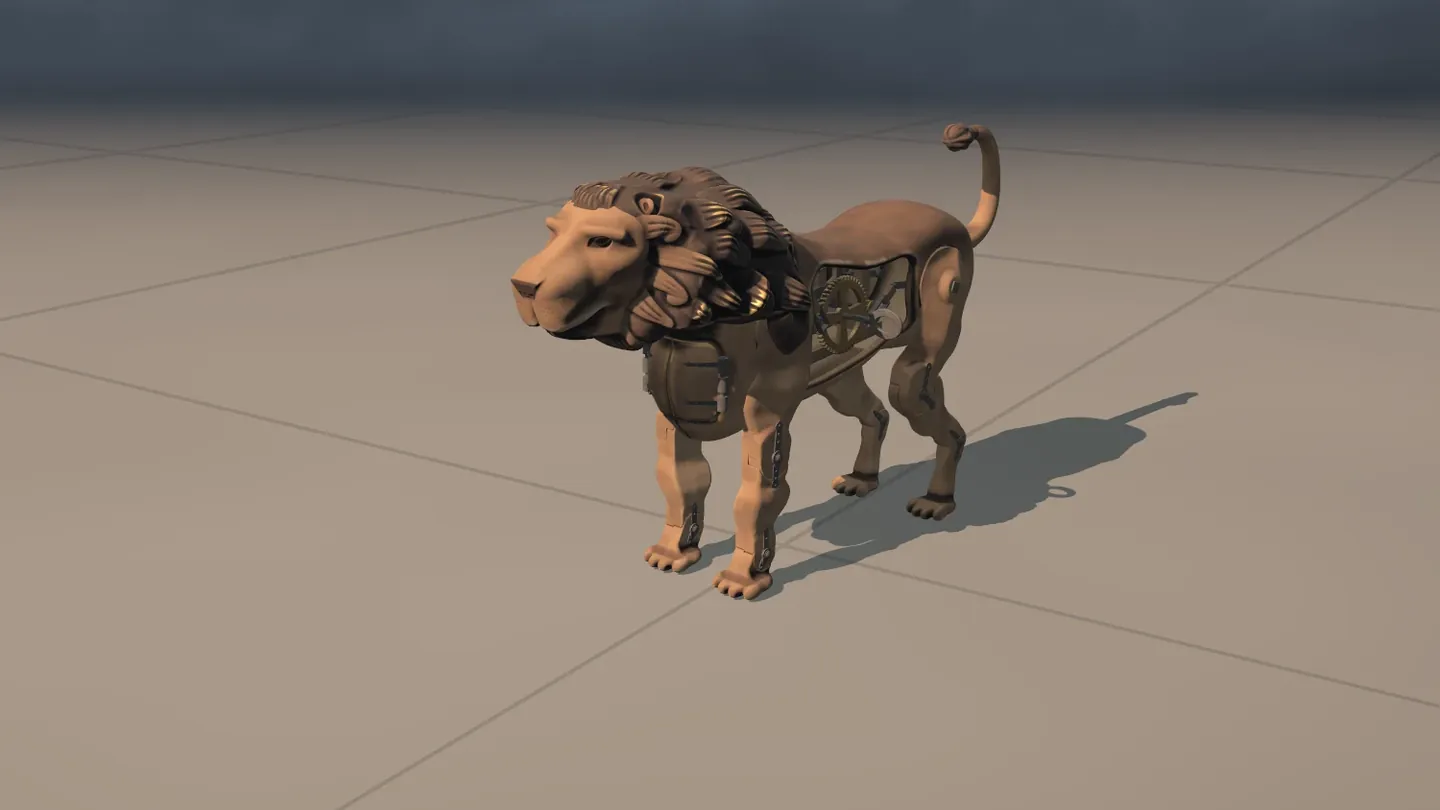
The lion is the one machine here without a sheet. Vasari wrote in 1568 that the King of France came to Milan and that Leonardo, asked for something strange, made a lion. It walked several steps, then opened its chest and showed it full of lilies.
The museum has not built any of these. Most belong to twenty-seven other studies of his that give too little to build from. Some sheets of those studies are among the pages at the reading table.
It is hard to name a machine that was surely his own idea and surely built. He drew many, and for almost all of them our research found no record that he built one. Several kinds were older than he was: canal locks, the water screw, a wind plate that Alberti described in 1450. Reference works often credit him with the lock gate of two leaves that meet at an angle. What the sheets do hold is his own working out of a problem: an aerial screw of starched linen, a parachute with its sizes, a bearing of eight wooden balls.
He drew an aerial screw, a spiral sail on a mast, and wrote that it would rise if it was turned fast. The sheet names no drive for the large one. For a small paper model it names a twisted strip of iron as a spring. No record is known of it being built in his lifetime, and by our estimate a machine of 400 kilograms would need at least nineteen kilowatts to lift itself. Calling it a helicopter says more than the sheet does.
No flight of his own is documented. His studies of flapping wings give no complete plan to build from. In his notebook on the flight of birds a promise of flight is written about the future. It is not a report.
He drew an armoured car, a covered wagon moved by people turning cranks inside. The British Museum, which holds the drawing, records it as unbuilt. Calling the drawing a tank does not show that he invented the modern tank.
Yes, more than one. Two sheets of the Codex Atlanticus, dated to about 1485 to 1487, show a temporary wooden bridge for an army. A museum in Vinci reads it as logs that hold each other without rope. A sketch in Manuscript L is for a bridge from Pera to Constantinople, across the Golden Horn. It was not built. In 2001 a footbridge after that sketch opened in Norway.
The originals are in a few libraries and collections, none of them in this museum. The Codex Atlanticus, with 1,119 leaves, is in the Veneranda Biblioteca Ambrosiana in Milan. Twelve notebooks are in the Bibliothèque de l'Institut de France in Paris, two in the Biblioteca Nacional de España in Madrid, and five, bound in three volumes, in the Victoria and Albert Museum in London. About 550 leaves are in the Royal Collection at Windsor. The Codex Arundel is in the British Library in London, the Codex on the Flight of Birds in the Biblioteca Reale in Turin. One notebook is privately owned. At this museum's reading table you turn photographed pages, and each one names the notebook it comes from.
The facts on this page come from the research for the museum's Leonardo wing. They were checked against the holders' catalogues and the digital editions of the notebooks, as far as these could be read. In the museum each machine's close look carries its record: the sheet, what the sheet does not say, the arithmetic and the sources.
For the lion: Vasari, Le vite, in the edition of 1568, and later accounts.
For the drawings we have not built: the British Museum and the British Library in London, the Biblioteca Reale in Turin, and the two libraries named above for the Codex Atlanticus and for Manuscripts B and L.
The dates of the Codex Atlanticus sheets follow the standard catalogue of the codex, as the Museo Galileo's edition prints it. The dates of the Paris notebooks and of Codex Forster I are the holders' own.
The museum names these houses as the holders of the originals. It is independent of all of them.
The pictures on this page are frames from the museum's own film: rooms and machines built in code. The book at the reading table is a printed facsimile of Manuscript B from 1883, in the public domain by age.
If a date, a folio or a holder is wrong, tell us and we will correct it. To the legal notice
The door opens the Leonardo wing at its beginning. The picture room comes first, the mechanism hall later on the walk.
Free entry, no account.